Roof Leak Repairs
Tile Roof Leak Repairs for Sydney Homes
On a tile roof the leak is rarely where the stain is -- water travels along the sarking before it drips.
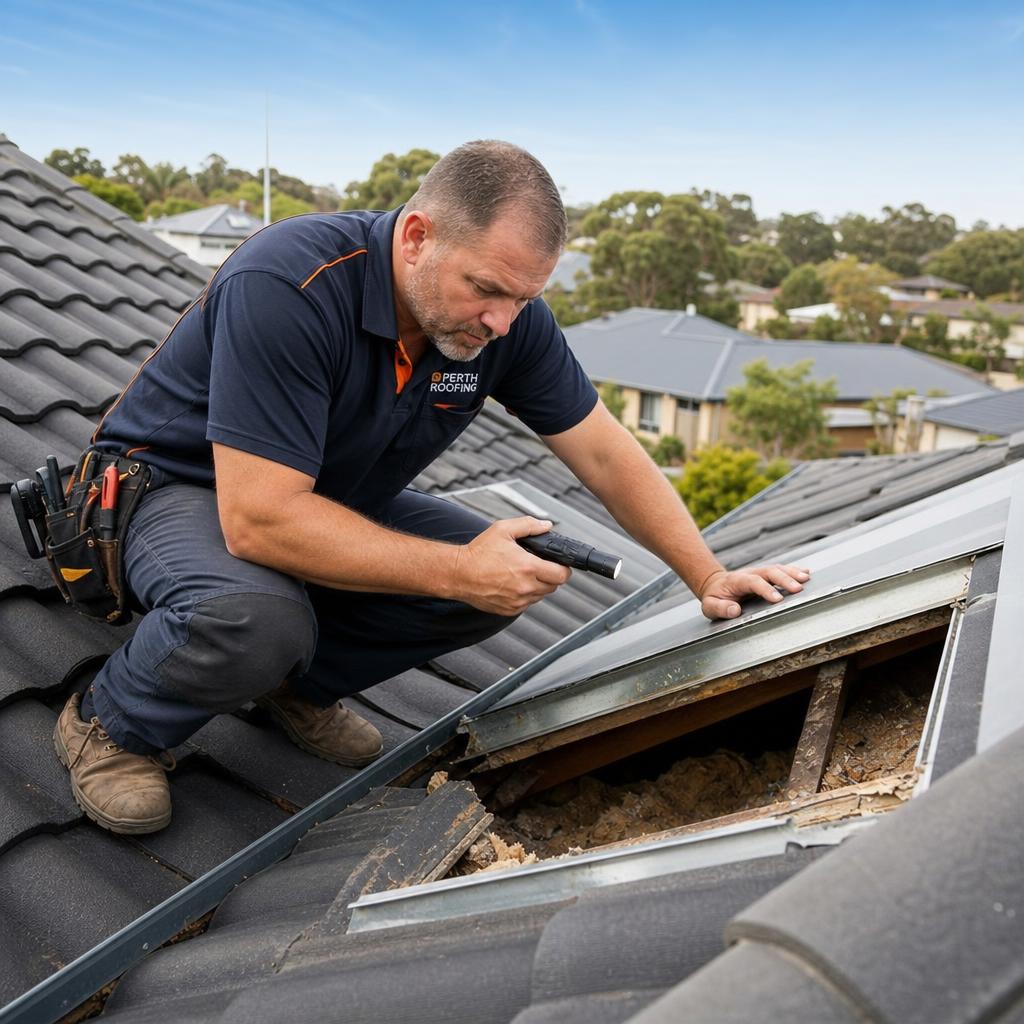
Tile roofs leak in ways their own construction hides. A cracked tile, a perished pointing joint or a failed valley lets water in high up, then the sarking or the tile underside carries it several metres before it finds a gap and drips onto your ceiling. So the wet patch inside is almost never directly under the fault. We diagnose terracotta and concrete tile roofs by following the water uphill to where it actually enters, then repair the cause.
Where tile roofs actually leak
The common sources are surprisingly few: cracked, slipped or porous tiles; failed bedding and pointing along the ridges and hips; rusted or split valley irons; and broken seals at flashings around penetrations. Concrete tiles can lose their surface glaze and become porous with age, soaking up water rather than shedding it. Terracotta tiles crack from foot traffic, tree impact and thermal movement, and once one lets go the water gets underneath.
Ridge capping is a frequent offender. The old cement mortar (the bedding and pointing that holds cappings down) cracks and lets go over the years, opening a path for water and loosening the cappings themselves. That is why re-bedding and re-pointing is one of the most common tile-roof repairs we carry out.
Why the drip is never under the fault
Because a tile roof is a layered system -- tiles over battens over sarking -- water that gets past a broken tile lands on the sarking and runs downhill along it until it reaches a lap, a tear or a batten fixing, then drops. On a typical pitch that can be metres away from the entry point and on a completely different part of the ceiling.
This is the single biggest reason tile leaks get 'fixed' repeatedly without success: someone seals the tile directly above the stain and the water simply keeps coming from the real fault higher up. We trace the flow path properly rather than treating the visible symptom.
How we re-bed and re-point ridge capping
When the cappings are the problem we lift them, remove the old failed mortar, and re-bed the cappings on a fresh mortar base so they sit true and secure. We then re-point with a flexible pointing compound rather than rigid cement, because the flexible material moves with the roof's thermal expansion instead of cracking straight back apart the way old-style mortar does.
Individual cracked or slipped tiles are replaced with matching terracotta or concrete tiles wherever we can source them, so the repair blends in and the water seal between tiles is restored. We only recommend a wider re-roof when the tiles themselves are past economic repair, and we say so honestly.
What's Included
- Replacement of cracked, slipped or porous terracotta and concrete tiles
- Re-bedding and flexible re-pointing of ridge and hip capping
- Repair or replacement of rusted valley irons
- Re-sealing of flashings around vents, pipes and skylights
- Sarking inspection and flow-path tracing to find the true entry point
- Matching-tile sourcing so repairs blend with the existing roof
Frequently Asked Questions
Why does my tile roof leak away from where the tile is broken?
Because water getting past a tile lands on the sarking underneath and runs downhill until it finds a gap to drip through -- often metres from the entry point. That's why sealing the tile above the ceiling stain rarely works. We trace the flow path back to the real source.
What is re-pointing and does my ridge need it?
Pointing is the mortar that seals and secures the ridge and hip cappings. Over years it cracks and lets go, letting water in and loosening cappings. If yours is crumbling or you can see gaps, it likely needs re-bedding and flexible re-pointing, which lasts far longer than old rigid cement.
Can you match my old terracotta tiles?
Usually. We source matching or close-match terracotta and concrete tiles so replacements blend with the existing roof and restore the water seal between tiles. If your tile is discontinued we'll tell you your options honestly rather than leaving a mismatched patch that stands out.
Are porous concrete tiles worth repairing?
It depends on their age and condition. Concrete tiles can lose their surface and soak up water over decades. A few can be sealed or replaced, but if most of the roof has gone porous, patching becomes a losing battle. We'll give you a straight assessment either way.
Request a Free Inspection
Book a free, no-obligation inspection with our local crew.
Ready To Protect Your Home?
Book Your Free Roof Inspection Today.
Whether you need emergency roofing, leak detection, storm damage repairs or simply peace of mind, our experienced roofing specialists are ready to help. No pressure. No hidden costs. Just honest roofing advice.