Roof Leak Repairs
Roof Leak Detection to Pinpoint the Source
Before we fix anything, we prove exactly where the water gets in.
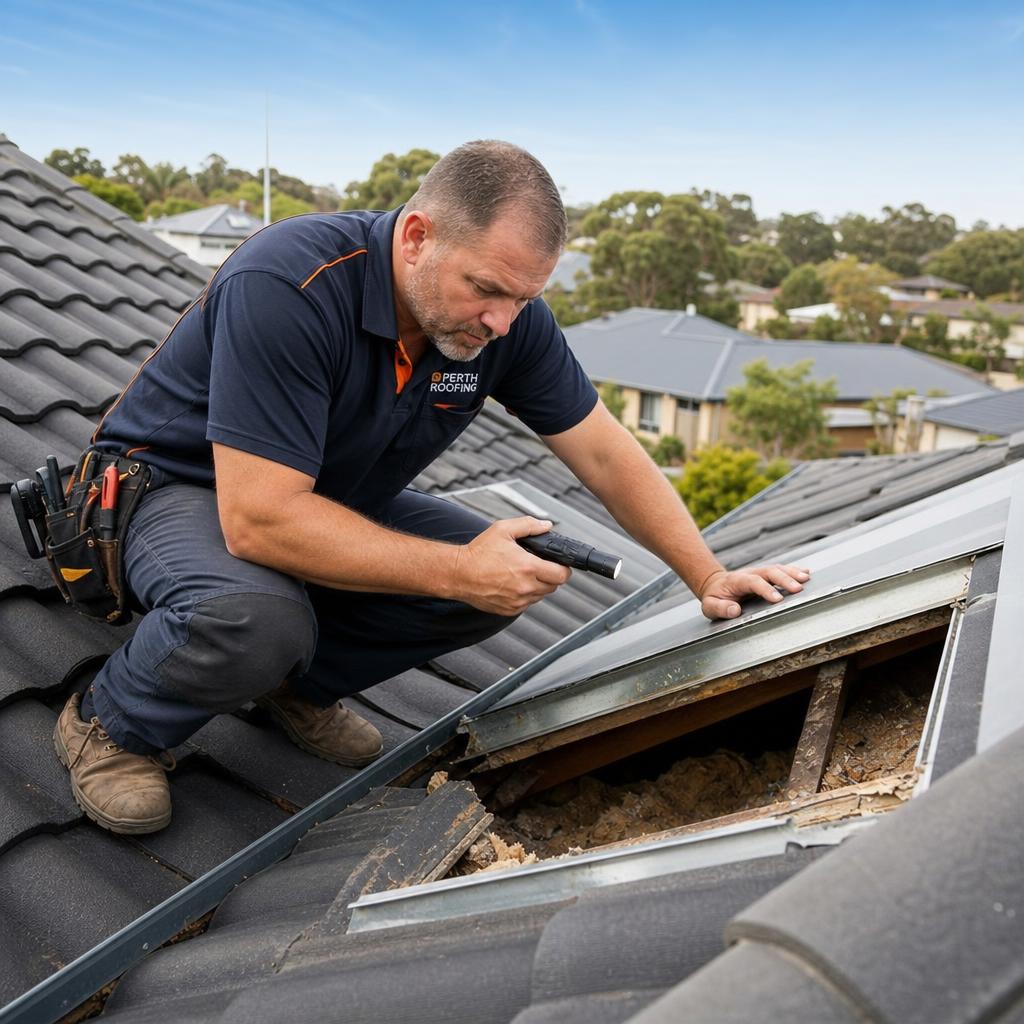
Detection is the part most roofers skip and the reason so many leaks come back. Finding the true entry point takes method, not guesswork -- water can enter high on the roof and appear metres away inside. We use a systematic approach: inspect the cavity, study the water path, and run controlled hose testing until we can point to the exact fault. Only then do we recommend a repair, so you are paying to fix the cause, not to gamble.
Controlled hose testing, section by section
The most reliable way to confirm a leak point is to recreate it. We wet the roof in stages, starting low and working uphill, with someone watching inside the cavity. When water appears, we know the entry point is in the section we just tested -- not somewhere we guessed. This methodical approach isolates the fault rather than soaking the whole roof and hoping.
Reading the roof cavity and the water path
Inside the cavity, water leaves a trail -- stained sarking, tide marks on timber, rust runs on nails and damp insulation all point back towards the entry. We follow these upstream to narrow the search before we even get the hose out. On complex roofs with valleys, skylights and multiple planes, this cavity work saves a lot of time and gets us to the right area fast.
When leaks are intermittent or weather-specific
Some leaks only show in wind-driven rain or a particular downpour direction, which makes them hard to catch. We account for this by testing at the angles and intensities that match when you actually see water. If a leak only appears in a howling southerly, watering it gently from directly above will never reproduce it -- we adjust our method to match the conditions.
What's Included
- Internal roof-cavity inspection to read stains, tide marks and damp trails
- Staged, controlled hose testing working from low to high
- Spotter inside the cavity to confirm the exact moment water enters
- Assessment of intermittent and wind-driven leaks at realistic angles
- Identification of every contributing entry point, not just one
- Written findings with the confirmed source before any repair is quoted
Frequently Asked Questions
How is leak detection different from just repairing the roof?
Detection is the diagnosis step -- proving exactly where water enters before anyone repairs anything. Skipping it leads to guesswork repairs that fail. We treat detection as its own careful process so the repair that follows is aimed at the real fault, not the nearest likely-looking spot.
Do you use water testing to find leaks?
Yes. Controlled hose testing is one of our most reliable tools. We wet the roof in stages while a spotter watches inside, so when water appears we know which section is at fault. It reproduces the leak in a controlled way rather than relying on guesswork.
My leak only happens in certain storms -- can you still find it?
We can, but it takes the right approach. Weather-specific leaks often need testing that matches the wind direction and rain intensity that trigger them. We ask you exactly when it leaks and replicate those conditions as closely as possible, rather than a gentle spray from above.
What happens after you find the source?
We show you what we found, explain the cause in plain English and recommend the repair. You get a clear picture before committing to any work, so the money goes towards fixing the confirmed fault rather than a shotgun approach across the whole roof.
Request a Free Inspection
Book a free, no-obligation inspection with our local crew.
Ready To Protect Your Home?
Book Your Free Roof Inspection Today.
Whether you need emergency roofing, leak detection, storm damage repairs or simply peace of mind, our experienced roofing specialists are ready to help. No pressure. No hidden costs. Just honest roofing advice.