Roof Leak Repairs
Flashing Leak Repairs for Sydney Roofs
Flashings weatherproof every join on your roof -- and every join is a leak waiting to happen if they're wrong.
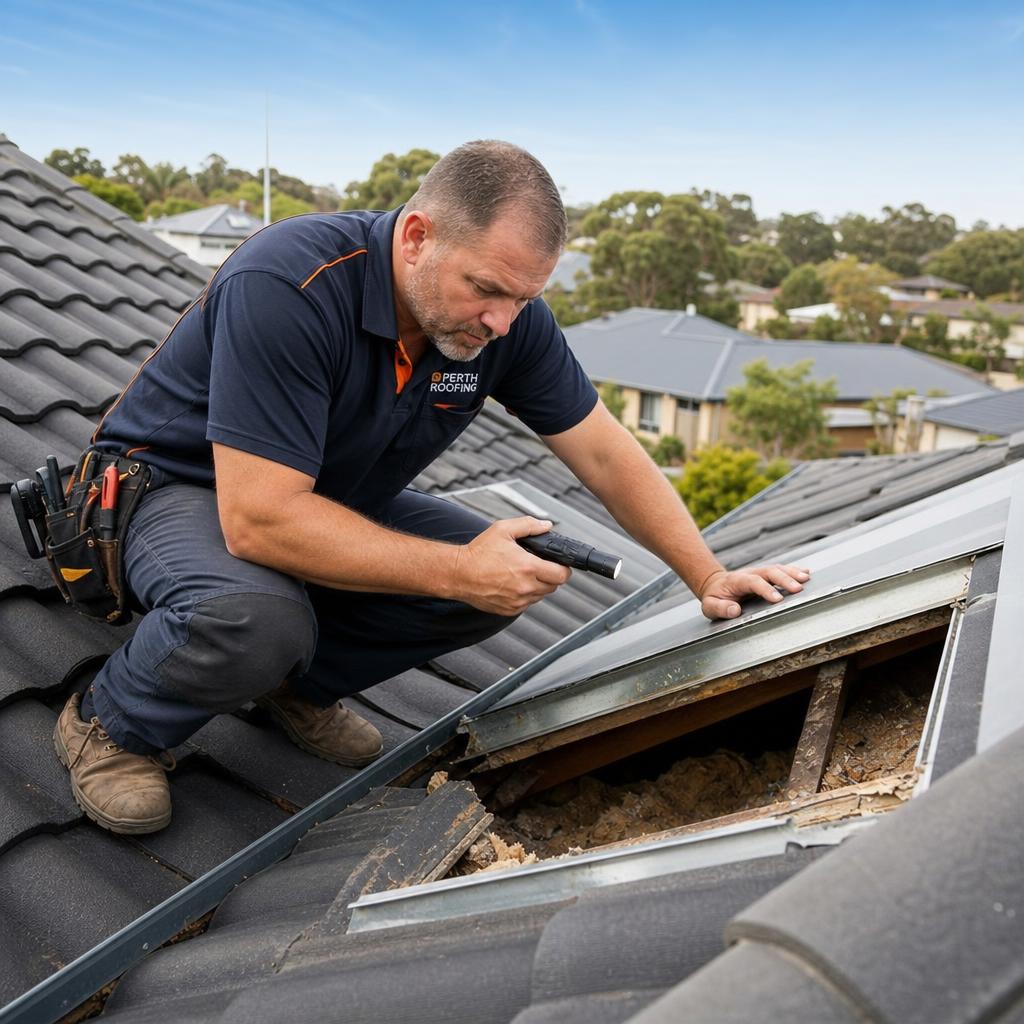
Flashings are the metal that seals the joins -- where the roof meets a wall, a chimney, a parapet or another roof plane. Those junctions are where the vast majority of roof leaks begin, because a flat sheet almost never fails but a poorly detailed join always will. Good flashing repair is about geometry: adequate upstand, correct laps and enough cover so water is directed out, not trapped. We fix the detail, not just the gap.
The flashings that leak most
Wall and apron flashings, where a roof abuts a wall, top the list -- if the upstand is too short or the flashing wasn't chased into or properly turned up the wall, water tracks behind it. Step flashings on tiled roofs against a wall fail when individual steps lift or the pointing above them lets go. Parapet and box-gutter flashings on flatter commercial and terrace roofs are high-risk because water sits against them, and barge and ridge flashings fail from wind lift.
Age and movement play a part too: metal flashings corrode, sealants perish, and thermal expansion works fasteners loose over the years. But the leaks that keep coming back are almost always the ones where the original detail was wrong, not just worn.
Why sealant alone doesn't fix a flashing
It's tempting to run a bead of silicone along a leaking flashing, and it might dry the ceiling for a season. But sealant is a gap-filler, not a waterproofing method -- it moves, cracks and peels, and once it lets go the leak returns, often worse because water is now trapped behind the failed bead. A flashing has to shed water by its shape and overlap, with sealant only as a secondary seal, never the primary defence.
That's why we assess the upstand height, the lap direction and the cover before we do anything. If the geometry is wrong, no amount of sealant will hold, and we say so.
How we repair and refit flashings
Where a flashing has simply perished we replace it with correctly folded metal, set the upstand to a proper height, lap it in the right direction and secure it mechanically before adding a secondary seal. Against masonry we chase the flashing into the wall or use a proper cap so the top edge is protected rather than left open to weather. On tiled roofs we integrate step flashings with the tile courses so each step overlaps correctly.
We match the flashing material to the roof and to adjacent metals to avoid galvanic corrosion, and we choose compatible sealants that flex with the roof's movement. The aim is a join that works by design so it stops leaking permanently, not until next summer.
What's Included
- Inspection of wall, apron, step, parapet, barge and ridge flashings
- Assessment of upstand height, lap direction and water-shedding cover
- Replacement of corroded or perished flashings with correctly folded metal
- Chasing flashings into masonry or fitting proper cap flashings
- Integration of step flashings with tile courses
- Compatible, flexible secondary sealing to suit roof movement
Frequently Asked Questions
What exactly is a flashing?
Flashing is the metal that weatherproofs the joins on your roof -- where it meets a wall, chimney, parapet or another roof plane. Those junctions are where most leaks start, because flat sheet rarely fails but a badly detailed join always will. Flashings direct water away from the join.
Can't you just silicone the leaking flashing?
Sealant is a secondary measure, not a fix. It cracks and peels, and once it lets go the leak returns -- often worse, with water trapped behind. A flashing must shed water by its shape and overlap. If the upstand or lap is wrong, no sealant will hold, and we'll tell you.
Why does the same flashing keep leaking after repairs?
Almost always because the original detail is wrong -- too short an upstand, the wrong lap direction, or no proper cover -- and it's been sealed rather than corrected. We fix the geometry so the join works by design, which is why our repairs hold when repeated caulking hasn't.
Do flashing materials matter?
Yes. The flashing has to be compatible with the roof and adjacent metals, or galvanic corrosion eats it away -- copper draining onto Colorbond is a classic example. We match materials and use flexible, compatible sealants so the repair doesn't quietly start corroding from the day it's installed.
Request a Free Inspection
Book a free, no-obligation inspection with our local crew.
Ready To Protect Your Home?
Book Your Free Roof Inspection Today.
Whether you need emergency roofing, leak detection, storm damage repairs or simply peace of mind, our experienced roofing specialists are ready to help. No pressure. No hidden costs. Just honest roofing advice.