Roof Leak Repairs
Chimney Leak Repairs for Sydney Homes
A chimney punches a hole through your roof -- so it needs flashing on all four sides done right, or it leaks.
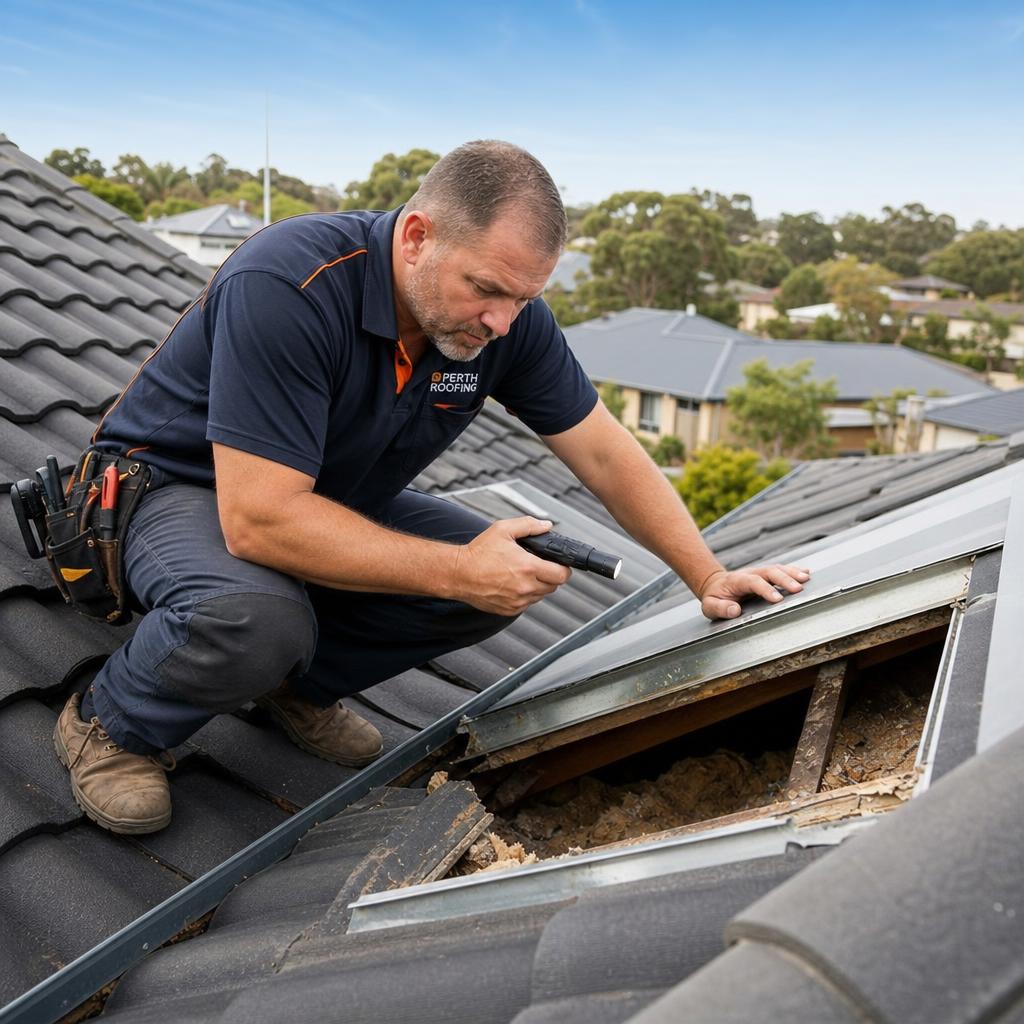
A chimney is a masonry structure pushed straight through the roof, and every side of it is a potential leak. Water gets in around the flashings that weatherproof the base, through cracked mortar and porous brickwork on the stack itself, and through a failed or missing cap on top. The tricky part is that a 'chimney leak' can be a roofing fault or a masonry fault, and the honest first step is working out which -- because sealing the wrong one wastes your money.
The four ways a chimney leaks
First, the flashings. A chimney needs flashing on all four sides -- an apron at the front, step flashings up the sides and a back flashing or cricket at the rear -- and it's usually the back, where water piles up against the uphill face, that fails first. Second, the mortar joints in the brickwork crack and let water track down inside the stack. Third, the bricks themselves can become porous with age and soak up water. Fourth, the cap or crown on top cracks or is missing, letting rain straight down the flue.
Because there are four distinct sources, a proper diagnosis matters. Water showing at the ceiling near a chimney could be coming from any of them, or from the roof beside it entirely.
Roof fault or masonry fault?
This is the decision that saves you money. If the leak follows the flashing lines and appears with driving rain, it's usually a roofing job -- refitting the apron, steps and back flashing. If the brickwork is spalling (flaking) or the mortar is crumbling and the water is tracking down inside the stack, it's a masonry problem: repointing, sealing the brickwork, or repairing the crown.
We diagnose honestly rather than defaulting to the trade we'd rather do. Sometimes the right answer is that the chimney is disused and the most cost-effective, permanent fix is removing it below the roofline and sheeting over -- and if that's the sensible option for your home, we'll say so.
How we re-flash and weatherproof a chimney
For a flashing repair we fit or refit all four sides so they work as a system: an apron that laps over the roofing downhill, step flashings integrated with the tile courses or sheeting up the sides, and a back flashing -- or a proper cricket (a small ridged diverter) on wider chimneys -- to split water around the uphill face rather than letting it pool. The top edges are chased into or capped against the brickwork so they can't lift or let water behind them.
Where masonry is the source we repoint failed joints, seal porous brickwork and repair or fit a cap so rain can't enter the flue. Where both roof and brickwork are involved, we address both, because fixing only half leaves you with half a leak.
Related roofing guides
What's Included
- Diagnosis of whether the leak is a flashing, mortar, brick or cap fault
- Refitting of apron, step and back flashings on all four sides
- Installation of a cricket diverter on wider chimneys where needed
- Repointing of cracked mortar joints and sealing of porous brickwork
- Repair or fitting of a chimney cap or crown
- Advice on removal and sheeting over for disused chimneys
Frequently Asked Questions
Why does my chimney leak on only one side?
Usually the back, uphill side, where rainwater piles up against the chimney as it runs down the roof. That face needs a proper back flashing or a cricket diverter to split the water around it. If that detail failed or was never fitted, the uphill side is where you'll see the leak first.
Is my chimney leak a roofing problem or brickwork?
Either. If it follows the flashing lines and worsens in driving rain, it's usually a roofing fix. If the mortar is crumbling or bricks are flaking and water tracks down inside the stack, it's masonry -- repointing, sealing or a new cap. We diagnose which before doing any work.
We never use the chimney -- should we just remove it?
Often the smartest, most permanent fix. A disused chimney is just a maintenance liability punched through your roof. Removing it below the roofline and sheeting over eliminates the leak source entirely. If that's the sensible option for your home, we'll tell you honestly and price both paths.
What is a cricket and does my chimney need one?
A cricket is a small ridged diverter fitted behind a chimney to split water around its uphill face instead of letting it pool there. Wider chimneys, especially on lower-pitch roofs, usually need one -- a flat back flashing alone can't cope with the volume piling up behind them.
Request a Free Inspection
Book a free, no-obligation inspection with our local crew.
Ready To Protect Your Home?
Book Your Free Roof Inspection Today.
Whether you need emergency roofing, leak detection, storm damage repairs or simply peace of mind, our experienced roofing specialists are ready to help. No pressure. No hidden costs. Just honest roofing advice.