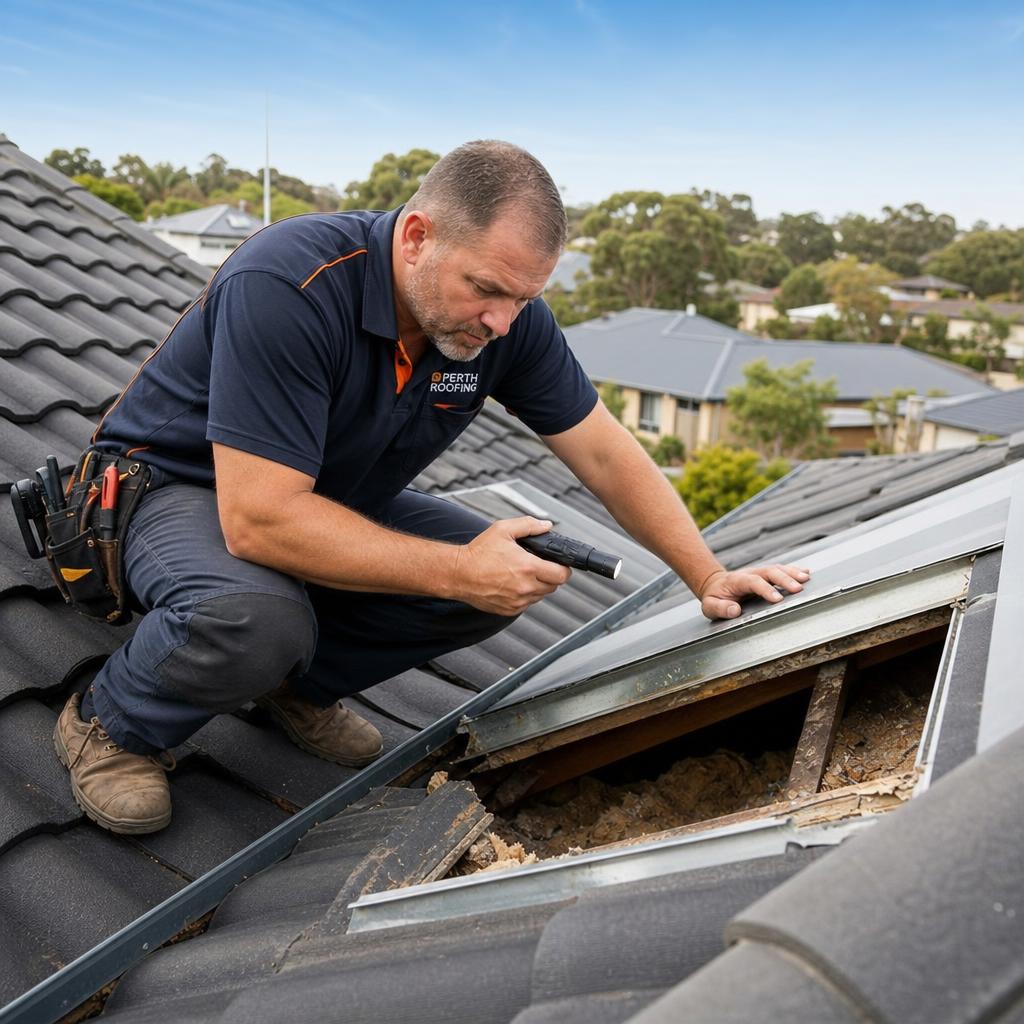
Water appearing beside a chimney is not always a failed roof flashing. Rain may enter through cracked mortar, porous or damaged masonry, a crown or cap, or the roof junction itself. Several faults can coexist. A useful inspection separates them before a repair quote bundles everything into an unexplained sealing job.
Start with where and when moisture appears
Tell the roofer whether dampness appears around the ceiling junction, on the chimney breast or inside an unused fireplace. Record whether it follows driving rain, a long wet period or no rain at all. These observations narrow the investigation but do not prove a cause; moisture can track down concealed faces of the stack.
Old staining can remain after an earlier repair. Photograph any fresh edge or dripping separately and retain previous chimney and roofing records. Do not light a fire to dry a damp chimney or assume it is safe to use. Suspected flue or appliance faults need assessment by the appropriate specialist.
The uphill face needs particular attention
The rear of a chimney interrupts water flowing down the roof. A back flashing, and where the design calls for it a diverter, must carry that water around the stack. Side and front flashings then return it onto the roof. Cracked junctions, debris pockets and poorly integrated overlaps can defeat this sequence.
The chimney leak repair service considers both the roof junction and the masonry, which helps avoid paying to renew flashings while water continues to enter higher up.
Masonry checks are a separate part of the diagnosis
Deteriorated mortar joints and damaged bricks can admit moisture above otherwise sound flashings. The crown or cap may also be cracked or missing. Surface sealers are not automatically suitable for every historic masonry system, and they are not a substitute for repairing loose or unstable material.
- Ask which faces of the chimney were inspected and which were inaccessible.
- Request separate findings for flashings, mortar, bricks and the top of the stack.
- Clarify whether roofing, masonry, structural or flue specialists are needed.
- Confirm any heritage controls before changing visible chimney details.
Compare repair scopes by cause
A flashing scope should explain the affected junctions and how new work integrates with the roof and masonry. A masonry scope should identify the defective joints or crown rather than simply promising to seal the chimney. Where both are involved, agree the trade sequence and who checks the completed interface.
Removing a disused chimney is not an automatic shortcut. Structural support, heritage restrictions, remaining flues and the new roof junction all need consideration. Do not remove bricks, apply products to a hot flue or climb onto the roof to investigate.
What to keep after the work
Keep before-and-after photographs, the agreed scope and any specialist recommendations together. Ask whether an observed fault was confirmed by testing or remains a possibility. If moisture returns, that record lets the next assessment revisit the unresolved part without starting from assumptions. Damp ceilings near electricity or loose masonry above occupied areas require urgent professional attention.
Identify the right chimney repair first
A clear distinction between roof, masonry and flue concerns helps you arrange the appropriate work in the right order.
Discuss chimney leak repairs