Roof Leak Repairs
Metal Roof Leak Repairs in Sydney
On a metal roof, the leak is almost always at a fastener, a lap or a flashing -- rarely the sheet itself.
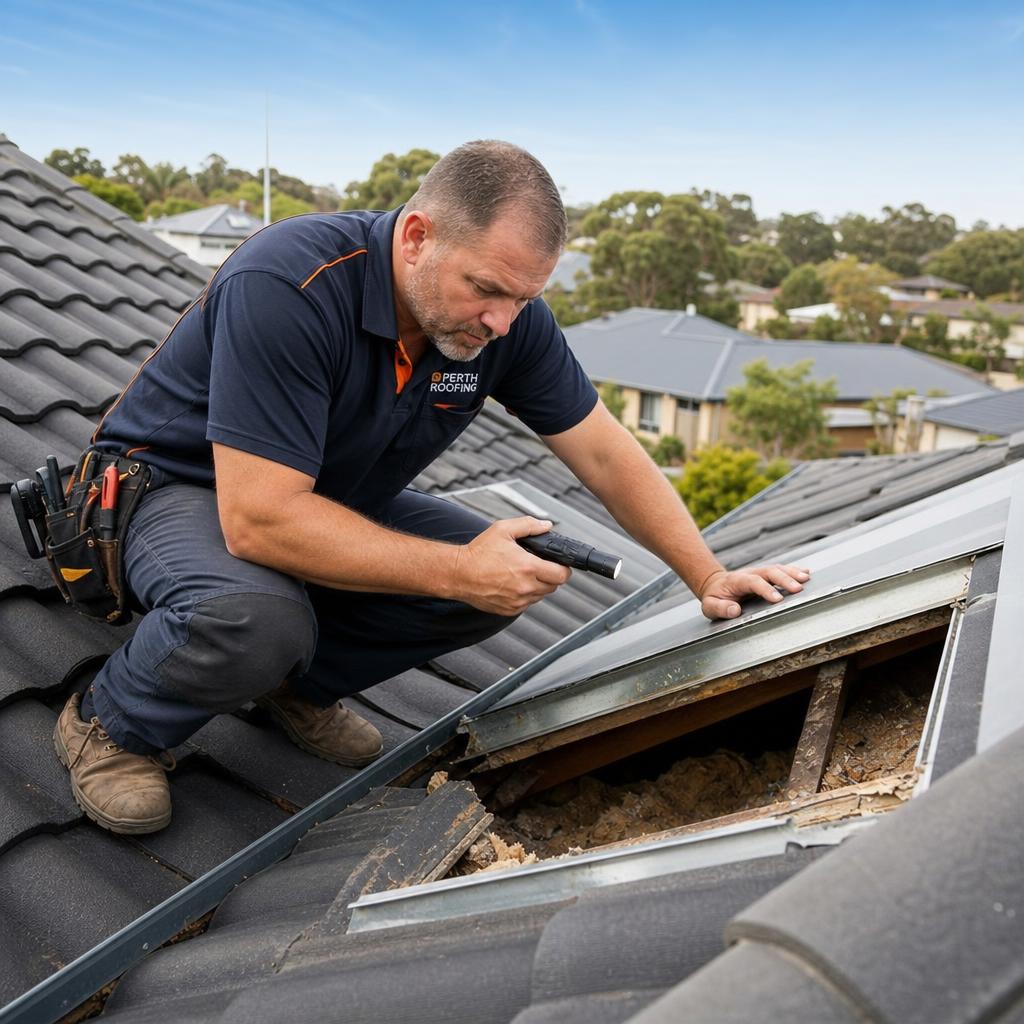
Metal sheet roofs rarely leak through the middle of a good sheet. They leak at the connections: screw penetrations with perished washers, end and side laps that have opened or been laid at too low a pitch, rusted-out valleys, and flashings that have lifted or corroded. We diagnose metal roofs by working through those weak points in order, because chasing a mystery drip across a wide sheet almost always ends at a fixing you can only see up close.
Fasteners: the number one metal-roof leak
Roofing screws seal against the sheet with a neoprene washer under the head. Over the years UV and heat cook that washer until it splits, and the screw hole becomes an open leak every time it rains. Overdriven screws that crushed the washer on installation, or underdriven ones that never sealed, do the same thing. On an older roof there can be hundreds of these, so we assess whether targeted washer or screw replacement is enough or whether a full re-fastening is the honest call.
Rust around a fastener is a warning: once the coating is breached the hole enlarges and the surrounding steel corrodes. We treat and seal minor cases and cut out and patch or replace sheeting where corrosion has taken hold.
Laps, pitch and capillary action
Metal sheets overlap at their ends and sides, and those laps rely on adequate roof pitch to shed water. When a roof is too flat for its profile, or an end lap is too short or unsealed, water rides up the join by capillary action and enters underneath -- worst in heavy or wind-driven rain. This is a design-and-detail fault, not just wear, so we check the pitch and lap coverage against the profile's minimums rather than just squirting sealant into the gap.
Where laps are the source we increase overlap, add sealant tape or storm closures, or in genuinely under-pitched sections recommend the correct fix rather than a sealant that will fail again next storm.
Valleys, flashings and penetrations
Metal valleys and box gutters rust from the bottom of the pan where water and debris sit longest, and a pinhole there leaks constantly. We inspect valley irons and box gutters for corrosion, silt and inadequate overflow, and replace rather than patch where the metal is thin. Wall, apron and barge flashings are checked for lift, corrosion and adequate upstand.
Penetrations -- vent pipes, aerials, solar mounts and flues -- are common leak points where the flashing boot or collar has perished or was never sealed correctly. We refit these with proper weathertight collars instead of relying on silicone alone.
What's Included
- Assessment and replacement of perished, overdriven or corroded roofing screws
- Neoprene washer renewal or full re-fastening where warranted
- Lap, pitch and capillary checks against profile minimums
- Storm closures, sealant tape and increased lap coverage where needed
- Rust treatment or sheet replacement for corroded pans and valleys
- Weathertight refitting of penetration flashings and collars
Frequently Asked Questions
Why is my metal roof leaking if the sheets look fine?
Because metal roofs almost always leak at the connections, not the sheet middle. Perished screw washers, opened laps, rusted valleys and lifted flashings are the usual sources. The sheet can look perfect from the ground while a hundred tiny fastener holes are letting water in every time it rains.
Can you just re-silicone the screws?
Sometimes silicone buys time, but it isn't a lasting fix once washers have perished. The proper repair is renewing the washers or the screws so the seal is mechanical again. On a badly weathered roof we may recommend full re-fastening, and we'll tell you honestly which your roof needs.
My roof leaks in heavy rain but not light showers -- why?
That usually points to laps and pitch. If sheets overlap too little or the roof is too flat for its profile, water rides up the join by capillary action in a downpour and enters underneath. It's a detailing issue, so the fix is increasing lap coverage or adding closures, not just sealant.
Should I patch a rusty valley or replace it?
If the corrosion is a small isolated spot we can treat and seal it, but valleys rust from the pan where water sits, and thin, pitted metal will fail again nearby. Where rust has taken hold we replace the valley iron -- patching thin steel is false economy.
Request a Free Inspection
Book a free, no-obligation inspection with our local crew.
Ready To Protect Your Home?
Book Your Free Roof Inspection Today.
Whether you need emergency roofing, leak detection, storm damage repairs or simply peace of mind, our experienced roofing specialists are ready to help. No pressure. No hidden costs. Just honest roofing advice.