Roof Repairs
Roof Flashing Repairs Across Sydney
Most roof leaks start at the flashings, not the tiles — we fix them properly.
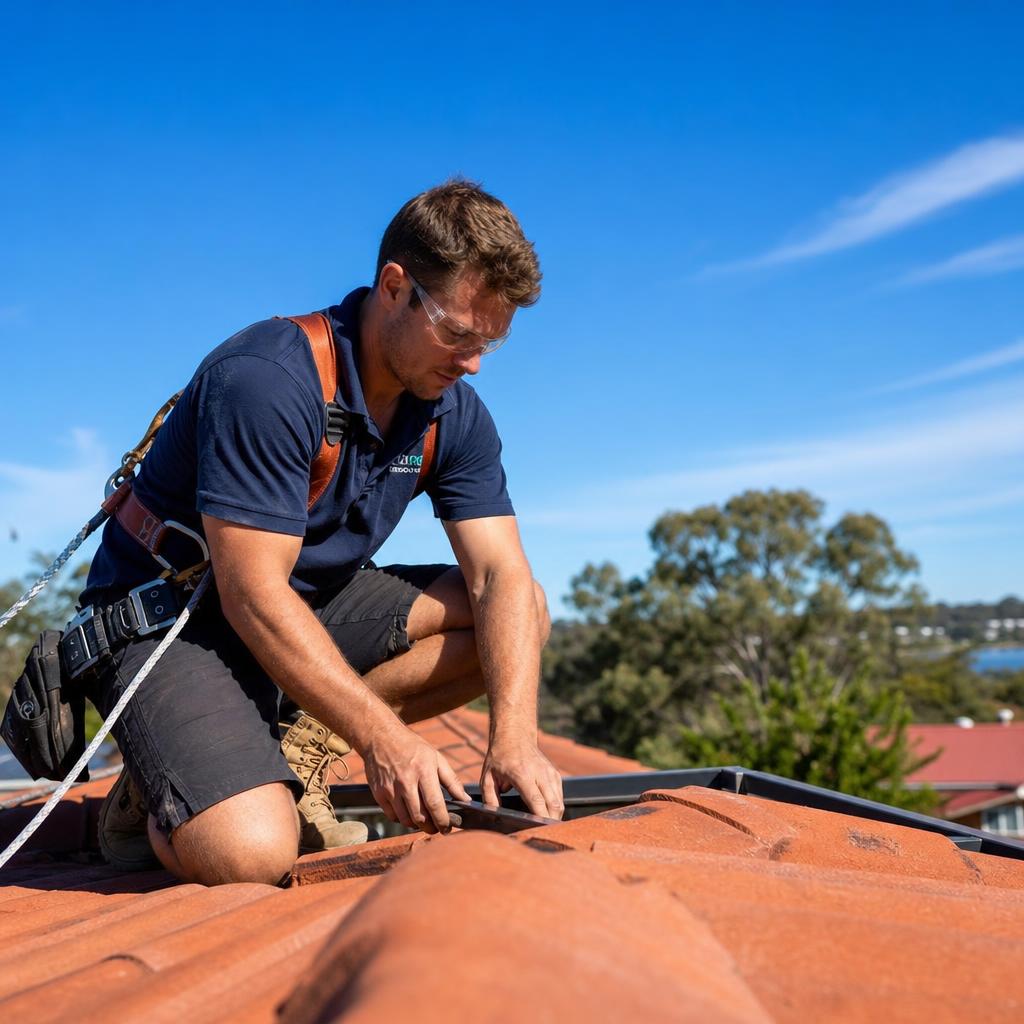
Flashings are the metal and sealant details that waterproof every join on your roof: where it meets a wall, a chimney, a skylight, a vent pipe or a change in roof direction. They cop the most water and movement, so they are usually the first thing to fail. When a Sydney roof leaks, nine times out of ten the trouble is a lifted, corroded or badly sealed flashing rather than the roof covering itself.
Why flashings fail before the rest of the roof
Flashings sit at the busiest points for water and thermal movement. Every hot day and cool night makes the metal expand and contract against masonry or timber that moves at a different rate, so old bedding mortar cracks and mastic sealant goes brittle and pulls away. Sydney's salt-laden coastal air also eats into older galvanised and lead flashings, leaving pinholes and rust streaks that let water track behind the metal.
The other common culprit is a botched previous repair. We regularly pull off flashings that were simply smeared with silicone over a gap. Silicone lasts a season or two, then lets go, and the leak comes back worse because water has been sitting behind it. A flashing has to physically shed water by shape and overlap, not rely on a bead of sealant to hold the line.
The flashings we repair and how we do it
We repair apron flashings where a wall meets the roof, step flashings up the side of a chimney or parapet, saddle flashings behind chimneys, and penetration flashings around vent pipes, flues and skylights. On tiled roofs that usually means re-forming lead or aluminium into the tile profile and mechanically fixing it; on metal roofs it means correctly lapped and fastened Colorbond flashings with the right turn-ups.
Where the flashing chases into brickwork, we cut a proper reglet or use lead wedges and repoint, rather than surface-sealing. We finish with a neutral-cure sealant only as a secondary barrier, never as the primary defence. The aim is a detail that sheds water on its own so it keeps working long after any sealant has aged.
Signs your flashings need attention
Watch for water stains on internal walls directly below a chimney, skylight or where a lower roof abuts an upper wall — these are classic flashing leaks. Outside, look for rust bleed, lifted or curling metal edges, cracked pointing along the flashing line, and old silicone that has gone chalky or is peeling away.
Because flashing leaks track along framing before they drip, the internal stain is often a metre or more from the actual fault. That is why we trace the water path rather than just patching the nearest damp patch, so the repair addresses the real entry point.
What's Included
- Inspection of all wall, chimney, skylight and penetration flashings
- Removal of failed lead, galvanised or aluminium flashings
- Re-forming and mechanical fixing of new flashings to the roof profile
- Cutting proper reglets or repointing chases into masonry
- Neutral-cure sealing as a secondary barrier only
- Leak-path tracing to confirm the true point of entry
Frequently Asked Questions
Can't you just put silicone over the leaking flashing?
We could, but it won't last. Silicone over a gap fails within a season or two and traps water behind it, so the leak returns worse. A flashing has to shed water by its shape and overlap. We fix the metalwork properly and use sealant only as a backup, not the main defence.
Why is the water stain nowhere near my chimney?
Water entering at a flashing runs along battens and rafters before it drips, so the internal stain can appear a metre or more from the fault. We trace the water path back to the actual entry point rather than patching the nearest damp patch, which is why our repairs tend to hold.
What flashing material do you use in coastal Sydney?
Near the coast we favour lead or quality aluminium and Colorbond over old galvanised steel, because salt air corrodes galvanising quickly. The choice depends on your roof type and the exposure. We'll tell you honestly what suits your situation rather than fitting whatever is cheapest.
Will I need to replace tiles to fix the flashing?
Often we lift and refit the existing tiles around the flashing rather than replace them. If a tile is cracked or broken during access we'll match and swap it. We always leave the surrounding roof watertight and let you know if anything needed replacing before we do it.
Request a Free Inspection
Book a free, no-obligation inspection with our local crew.
Ready To Protect Your Home?
Book Your Free Roof Inspection Today.
Whether you need emergency roofing, leak detection, storm damage repairs or simply peace of mind, our experienced roofing specialists are ready to help. No pressure. No hidden costs. Just honest roofing advice.