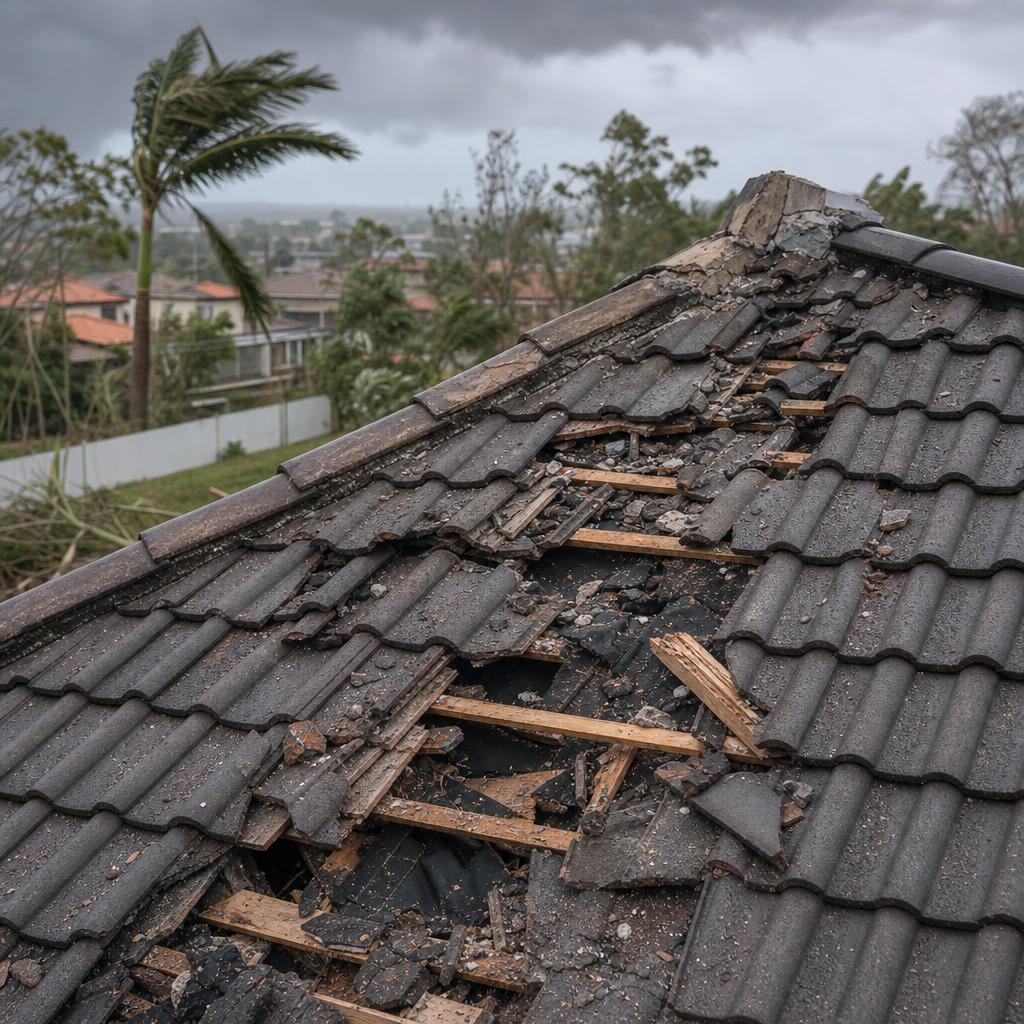
A roof does not have to lose sheets or tiles to suffer wind damage. Uplift can loosen connections, distort a flashing or move a cap without leaving a gap visible from the street. If a new rattle or rain leak follows strong winds, the absence of missing material should not end the investigation.
Why a complete-looking roof may still need attention
Wind loads are not uniform across a roof. Edges, ridges and exposed corners can experience different forces from the middle of a slope. One connection may move while neighbouring components remain in place. From below, the roof can appear unchanged even though a local fixing or junction no longer works as intended.
On metal roofing, a professional may look for distortion around fixing holes, loosened fasteners and damaged washers or laps. On tile roofs, shifted tiles and disturbed bedding or pointing can be relevant. Age-related deterioration can look similar, so an inspection should not label every worn component as storm damage.
Clues to share without going onto the roof
- New rattling or flapping during wind, described from a safe indoor position.
- Fresh leaks and the weather conditions when they appeared.
- Visible lifted edges or uneven caps observed from ground level.
- Debris found on the ground and photographs taken without approaching hazards.
- Any recent maintenance or roof equipment installation.
A wind damage roof repair assessment checks surrounding fixings and exposed details as well as the most obvious disturbed area.
Request a mapped inspection, not just a re-screw
Ask the roofer to identify inspected slopes and components, document observed movement and explain any access limitations. Simply tightening every screw may not address an enlarged fixing hole, weakened sheet or unsuitable support. Likewise, applying pointing over loose bedding can leave capping inadequately supported.
The repair method should suit the roof system and local design requirements. Larger fasteners or additional fixings are not universal upgrades; they need appropriate material, support and installation details. If the roof structure or its connections are suspected to be damaged, an additional specialist assessment may be required.
Separate urgent stabilisation from permanent work
Loose material that could fall or become airborne needs prompt professional attention. Keep people clear of the affected perimeter and do not try to hold a sheet down or investigate in gusts. A temporary make-safe may be necessary before a fuller assessment is safe. Call emergency services where there is immediate danger to life.
For insurance purposes, retain dated photographs and observations and contact your insurer about its process. The report should distinguish fresh observed damage from pre-existing wear and explain uncertainty. The roofer documents condition; the insurer determines coverage.
Follow up after repair
Keep the repair locations, photographs and any retained-roof concerns in the handover record. A reduction in noise is useful but not the only completion check. Observe the next rain and wind safely, and report any remaining rattle or water entry with its location and timing so follow-up can be targeted.
Check beyond the missing pieces
A post-wind inspection can assess disturbed connections and surrounding details even when the roof still looks complete.
Arrange wind damage roof repairs