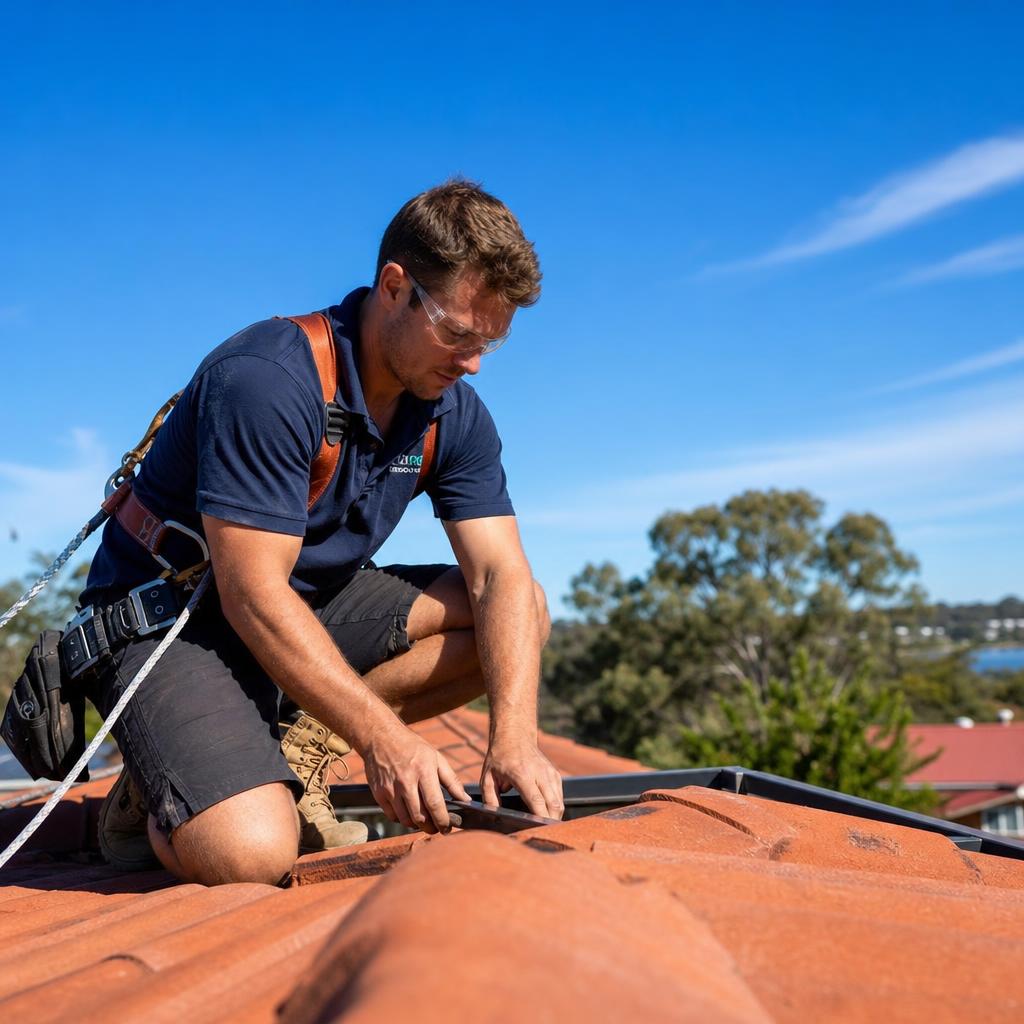
Stand across the street from your house and look along the ridge and eaves. A healthy roofline should read as straight and true. If you can see a dip, a bow or a wave in what ought to be a crisp line, that's your roof telling you something is under strain. A sagging roofline is one of those problems that's tempting to ignore because it develops slowly and doesn't always leak straight away — but it's usually a sign of a structural issue that only gets worse and more expensive the longer it's left.
How to Tell if Your Roof Is Actually Sagging
Some rooflines have always had a gentle curve by design, so the thing to watch for is change and irregularity. Sight along the ridge from a distance — a genuine sag shows up as a dip in the middle of a run or a localised hollow where the line should be straight. Inside, look for doors and windows in the top floor that have started sticking, cracks appearing at the corners of ceilings, or a visible bow in the ceiling itself. In the roof cavity, sagging shows up as timbers that have bowed, split or pulled away from each other.
A useful trick is to take a photo along the roofline every year or so from the same spot. Sagging almost always develops gradually, and week to week you'll never notice it — your eye adjusts to the new normal. But a photo from two or three years ago compared against today can make a slow dip obvious. The same goes for hairline cracks over doorways upstairs: one small crack means little, but a crack that keeps opening a little wider each season is worth taking seriously, because it often reflects the frame above continuing to move.
What Causes a Roof to Sag
A roof frame is a carefully balanced structure, and sagging happens when something upsets that balance. The causes range from simple age to serious water damage, and often it's a combination.
- Water damage rotting or weakening the rafters, battens or purlins
- Undersized or overstressed timbers, sometimes from the original build
- Extra weight the frame wasn't designed for, such as a heavier re-roof
- Failed or missing bracing and connections that let the frame move
- Termite or borer damage quietly eating away at structural timber
- Simple age and long-term load causing timbers to creep and deflect
Water is the villain in a huge proportion of cases. A slow leak that goes unnoticed for years keeps the roof timbers damp, and damp timber loses strength and eventually rots. Once a rafter or a run of battens softens, it can no longer carry its share of the load, the neighbouring members take up the slack, and the whole line starts to droop. This is exactly why a small, ignored leak can end up as a major structural repair.
Why You Shouldn't Wait
A sag doesn't fix itself, and it rarely stays still. As the frame deflects further, tiles or sheets shift, laps open up and new leaks form — which introduces more water, which weakens more timber, which increases the sag. It's a feedback loop. Caught early, a localised problem might be a matter of reinforcing or replacing a few members. Left for years, the same roof can need extensive re-framing or even partial replacement. There's also the safety angle: a badly compromised roof structure is not something to gamble with, particularly in a big storm.
How Sagging Roofs Are Repaired
Fixing a sag properly starts with diagnosis, not with jacking anything up. A roofer needs to get into the cavity and work out which members are affected, whether water or termites are involved, and whether the framing was ever adequate for the load. Only then does the actual repair make sense. Depending on what's found, the work can involve a range of measures.
- Replacing rotted or damaged rafters, battens and purlins
- Adding reinforcement such as struts, hangers or sistered timbers
- Fixing or upgrading bracing and structural connections
- Correcting the leak or moisture source that caused the damage
- In severe cases, re-framing the affected section or a full replacement
Crucially, any genuine repair has to deal with the cause as well as the symptom. Reinforcing a bowed rafter without stopping the leak that rotted it just resets the clock on the same failure. Where termites or borers are involved, that infestation needs treating too, or the new timber is on the menu next. For heritage and older Sydney homes especially, this kind of work benefits from someone who understands how the original structure was meant to behave.
Get It Looked At Properly
Because sagging is a structural matter, it's not a job for guesswork or a quick patch. If you've noticed a dip in your roofline, sticking doors upstairs or new cracks in top-floor ceilings, it's worth having the roof and its frame properly assessed before deciding what's needed. A good inspection looks at the whole picture — the timber condition, the moisture readings, signs of pest activity and whether the original framing was ever up to the load — rather than just the most obvious bowed member. That's what tells you whether you're facing a modest reinforcement or something more involved. Sometimes the news is good and it's minor; sometimes it's a warning caught just in time. Either way, knowing where you stand beats wondering.
If your roofline isn't as straight as it used to be, Roofing Experts Australia can inspect the structure and give you an honest assessment. Call 0416 689 689 for a free, no-obligation inspection anywhere across Sydney and NSW.