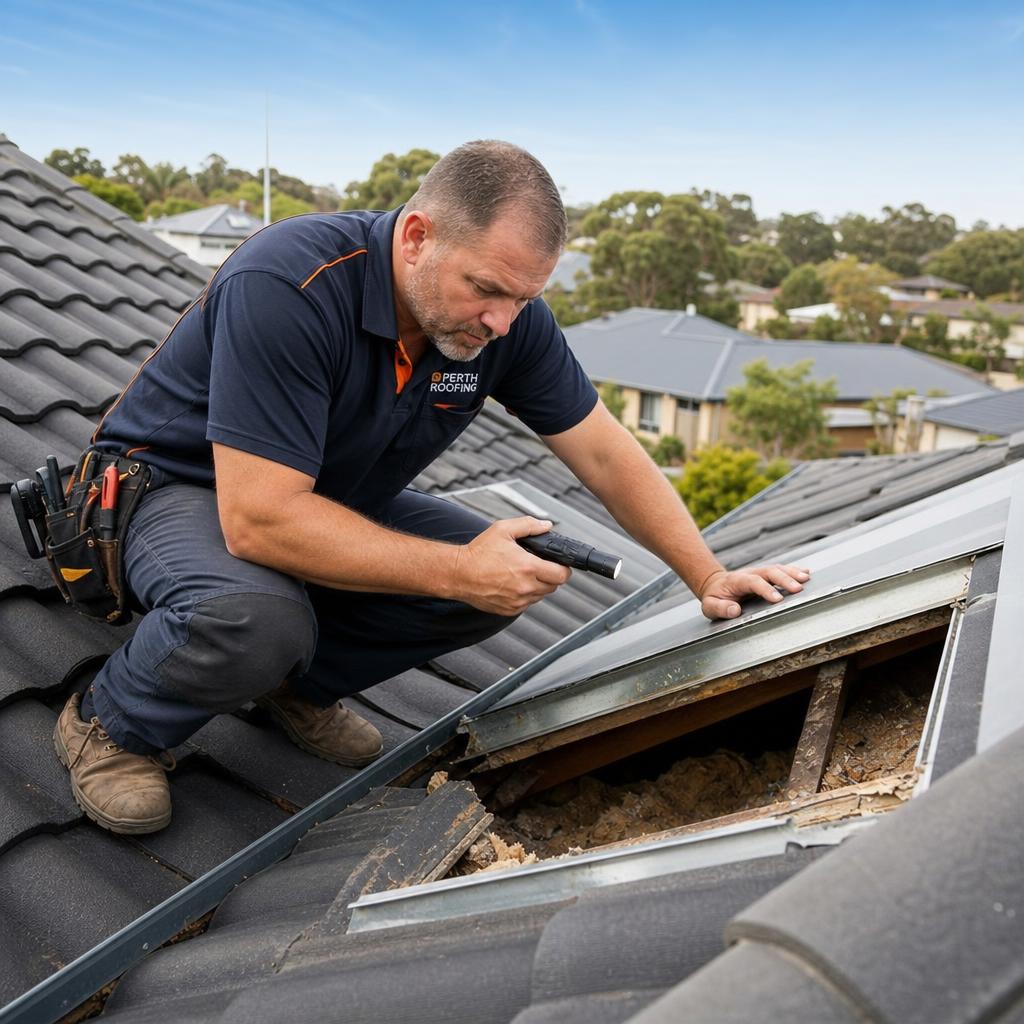
A ceiling stain reappearing after a repair does not automatically prove the same component has failed again. The first repair may have addressed one entry point while another remained, or changed the route water takes. Before agreeing to another patch, ask for a fresh explanation of the water path and how the proposed work differs from the last attempt.
Separate the old symptom from the current fault
Water can travel along battens, framing and underlay before reaching plaster. Marking the location of a stain helps an investigator, but is not a reliable way to choose the roof repair location. An old stain can also remain after the roof is dry. New dripping, a spreading edge or renewed dampness should be recorded separately from the original mark.
Compare when the leak happens now with when it happened before. A fault that returns only in wind-blown rain may need a different investigation from one that appears after a prolonged downpour. Two stains appearing together can indicate a shared drainage problem, but they may also be separate faults. Timing is evidence, not a diagnosis by itself.
Why adding more sealant can miss the cause
Earlier repairs sometimes cover a visible gap while leaving a short flashing, failed lap or undersized drainage path untouched. A bead placed across a drainage opening may even retain water. Removing earlier patches can be necessary to inspect the detail beneath, but that is professional work requiring safe access and temporary weather protection.
The purpose of persistent roof leak investigation and repairs is to review the earlier work and establish why it did not solve the observed problem, rather than automatically repeating it.
Prepare a useful repair history
- Keep earlier quotes, invoices, photographs and any written repair scope together.
- Record the date, rain duration and approximate wind direction for each recurrence.
- Photograph new internal marks from a safe position, without entering the roof cavity.
- Note whether the leak moved, reduced or stayed unchanged after each repair.
Ask what will confirm the new diagnosis
A roofer should identify what was observed, what is still uncertain and whether further inspection or a controlled water test is justified. Testing should isolate areas methodically; spraying the entire roof at once can produce an ambiguous result. A test cannot recreate every storm, so ask what follow-up evidence would be useful if the leak appears again.
The written scope should distinguish source repairs from drying, damaged insulation and ceiling reinstatement. These are different tasks and may involve other trades. Keep people away from sagging ceilings and water near electrical fittings; do not climb onto the roof or puncture wet plaster to investigate.
At the end of the repair
Request photos of the exposed fault and completed detail, the area tested and any limitations. Confirm who to contact if water returns and what the agreed workmanship terms cover. A dry afternoon alone is not proof that a weather-dependent problem is resolved, and repainting should wait until the source and affected materials have been assessed.
Stop repeating the same repair
Bring your repair history so the investigation can start with what has already been tried and what still needs explaining.
Discuss persistent roof leak repairs