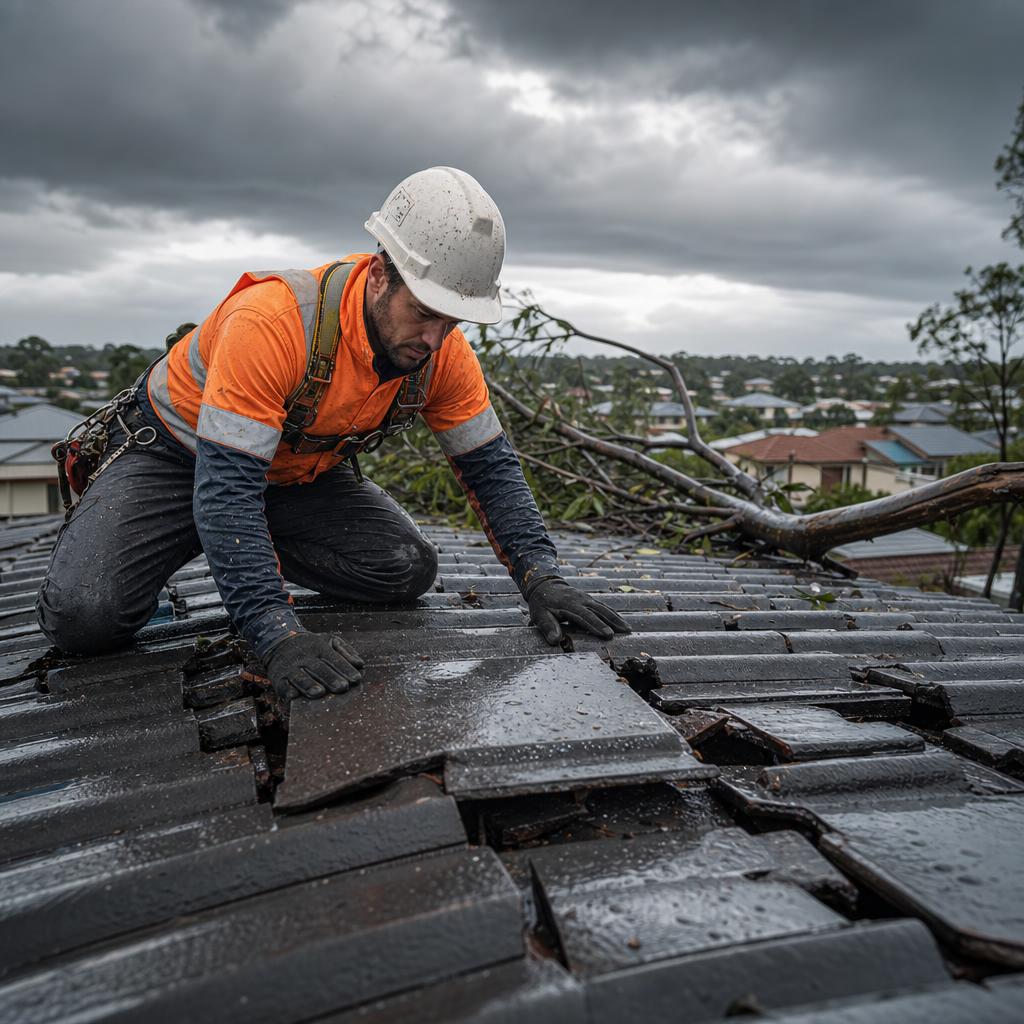
There's a particular kind of stress that comes with watching water drip through the ceiling while heavy rain hammers the roof. You want it to stop now, but you also know a bucket isn't a solution. The reality is that dealing with a leak has two distinct phases: the temporary fix that gets you through the storm, and the permanent repair that stops it happening again. Understanding the difference helps you make good decisions under pressure and avoid throwing money at a patch that was never going to last.
Temporary fixes: buying time in the wet
Temporary fixes exist for one reason — to limit damage while it's unsafe or impractical to do proper work. You can't reliably repair a roof in the middle of a downpour: surfaces are slippery, sealants and adhesives won't cure on a wet surface, and it's genuinely dangerous up there. So the goal shifts from fixing to containing. Inside, that means catching and channelling water away from ceilings and electronics. Outside, if it can be done safely, it means covering the entry point so less water gets in.
- Place buckets or bins under active drips and lay towels to soak up spread
- Move furniture, electronics and valuables out of the wet zone
- Ease water out of a bulging ceiling in a controlled way once the power's off
- Have a heavy-duty tarp fitted over the damaged area as an emergency make-safe
- Clear an obviously blocked gutter or downpipe if it can be reached safely
- Turn off power to any area where water is near wiring or downlights
Be honest with yourself about what's safe. Climbing onto a wet, steep or damaged roof in a storm is how people end up seriously hurt. If the fix requires you to be on the roof, that's a job to leave to a roofer with the right equipment. Inside the house, though, there's plenty you can safely do to protect your home while you wait.
Why temporary fixes fail if you rely on them
The trap is treating a stopgap as a solution. A tarp degrades in the sun and eventually lets go. A blob of sealant smeared over a crack in the wet won't bond and will lift within weeks. Even a tarp done well is only holding the line for days to a few weeks. Meanwhile the underlying problem — the cracked tile, the failed flashing, the rusted valley — is still there, and every rain event keeps water tracking into your timbers and insulation. Damp roof spaces breed mould and slowly rot structural timber, so a leak left as a permanent 'temporary' fix quietly gets more expensive.
Permanent repairs: fixing the actual cause
A permanent repair starts with finding where the water genuinely enters, which is often not where it appears inside. Water runs along battens and rafters before it drips, so the stain on your ceiling can be metres from the real hole. Once the source is confirmed in dry conditions, the fix depends on what's failed: replacing cracked or slipped tiles and re-bedding and pointing ridge capping; repairing or renewing flashings around chimneys, vents and valleys; patching or replacing rusted or split metal sheeting; or clearing and correcting drainage where blocked valleys and gutters are the culprit.
- Locating the true entry point rather than the visible stain
- Replacing cracked, chipped or slipped tiles
- Re-bedding and re-pointing loose or cracked ridge capping
- Repairing or renewing flashings around penetrations and valleys
- Patching or replacing rusted or split metal roofing sheets
- Correcting drainage where blocked or undersized gutters cause overflow
How the two phases fit together
In a real emergency the sensible sequence is: contain the water inside, arrange a professional make-safe over the roof, then book the permanent repair once the weather clears and the roof can be properly inspected and worked on dry. The make-safe and the repair are two different jobs, and a good roofer will be upfront about which one they're doing and why. If someone offers to 'permanently fix' your roof in the middle of a downpour, be sceptical.
If your roof is leaking right now, focus on protecting the inside of your home and stay off a wet roof. When you're ready to sort it properly, call us on 0416 689 689 — we can arrange an emergency make-safe to stop the water and follow up with a permanent repair once conditions allow, so you're not stuck emptying buckets every time it rains.
Why leaks often only show up in the heaviest rain
A roof that's bone dry through light showers and then suddenly leaks in a proper downpour is a common and telling pattern. Light rain runs off before it can find a small fault, but a heavy, driving downpour throws far more water at the roof and blows it sideways under wind pressure, forcing it up under tiles and behind flashings that shed a gentle shower without complaint. Blocked or undersized gutters make it worse — when they overflow, water backs up under the bottom rows of tiles or over the fascia. So the fact that a leak only appears in a storm doesn't mean it's minor; it usually means there's a real fault that only reveals itself when the roof is pushed. It won't fix itself, and each big storm makes it a little worse.
Getting the timing right
The most practical thing to understand is that the temporary and permanent phases run on different clocks. The temporary containment happens the moment the leak starts — buckets down, valuables moved, power off where needed, and a make-safe organised if the roof is compromised. The permanent repair waits for a dry roof, because that's the only way to find the true source, work safely and get materials to bond and cure as they should. Trying to compress both into one wet afternoon is how you end up paying twice: once for a rushed patch that fails, and again for the proper repair you needed all along. Do the temporary job now, book the permanent one for the first clear window, and you'll only deal with the leak once.