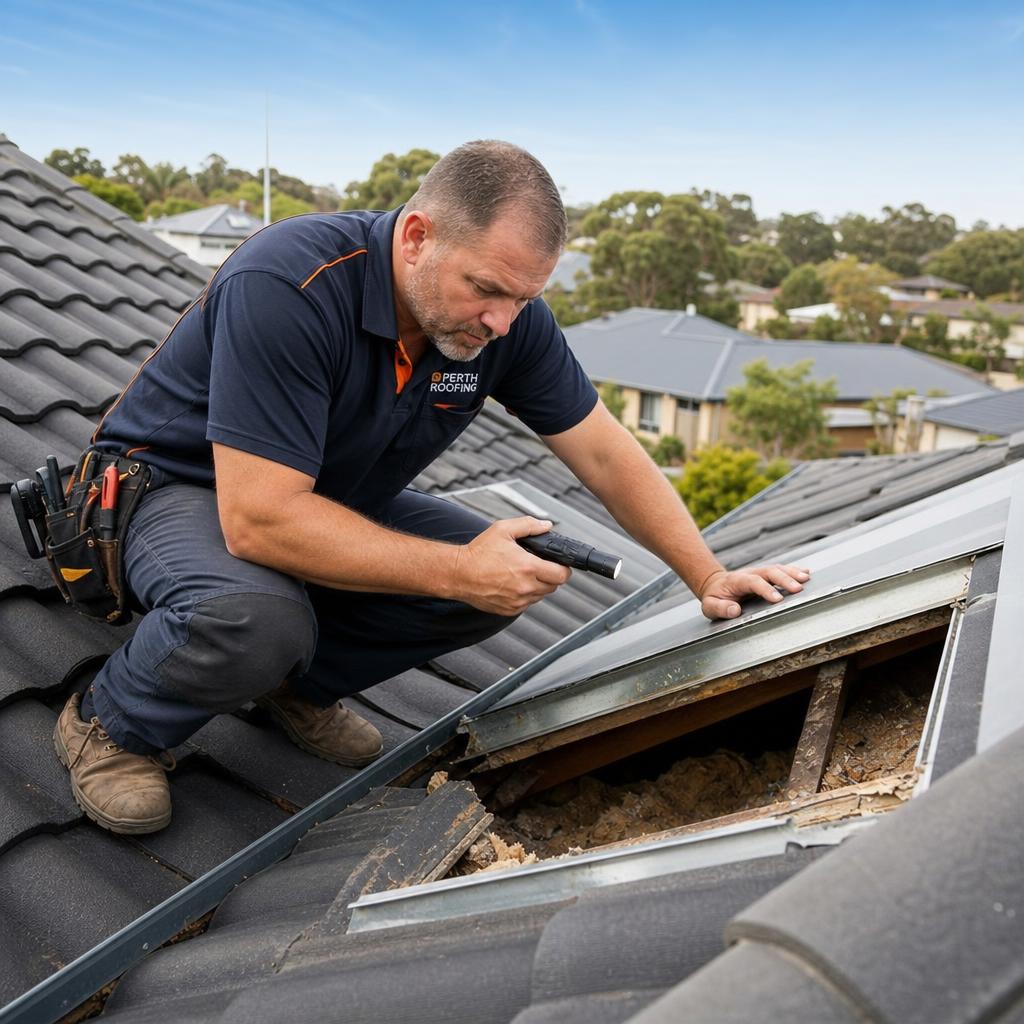
When most people picture a roof leak, they imagine a cracked tile or a rusted-through sheet of metal. Fair enough — that does happen. But after years of chasing leaks across Sydney and the wider NSW, we can tell you the single most common culprit isn't the roof surface at all. It's the flashing: the bits of metal that seal the joins where your roof meets a wall, a chimney, a skylight, a vent pipe or a valley. Get the flashing wrong and water finds its way in, no matter how good the tiles or sheets look from the street.
Flashing is one of those parts of a house that does an enormous amount of work while getting almost no attention. It's usually out of sight, it's often hidden under mortar or sealant, and it only announces itself once a ceiling stain shows up in the room below. This guide walks through what flashing actually is, where it lives on your roof, why it fails, and what an honest inspection should be looking for.
What Roof Flashing Actually Is
Flashing is thin, weatherproof material — most often colour-coated steel, zincalume, aluminium, or in older homes lead — installed at any point where the continuous roof surface is interrupted. The whole idea is to bridge a gap and direct water back onto the roof and into the gutters, rather than letting it run behind, under or through the join. A roof surface sheds water beautifully across a flat plane. The trouble is always at the edges and the transitions, and that's exactly where flashing earns its keep.
Think of it as a series of overlapping shields. Each piece is shaped and lapped so that gravity keeps water moving downhill and outward. When it's detailed properly, flashing can last decades. When it's rushed, reused, or relied on with a smear of sealant doing the real work, it becomes the weak link in an otherwise sound roof.
The Spots Where Flashing Does the Heavy Lifting
Every roof has a handful of predictable trouble spots. Knowing where they are helps you understand why a leak in one room can trace back to something metres away.
- Valleys — the internal gutters where two roof planes meet. Huge volumes of water funnel through here, so corroded or debris-clogged valleys are a classic leak source.
- Wall abutments — where a roof runs into a rendered or brick wall, such as a lower roof meeting a two-storey section.
- Chimneys — four sides of flashing, often with old lead and cracked mortar, make chimneys a perennial offender.
- Skylights and roof windows — the join between a manufactured unit and the surrounding roof relies entirely on correct flashing.
- Penetrations — vent pipes, flues, aerials and solar mounting feet all pierce the roof and need sealing.
- Box gutters and parapets — common on flat and low-pitch sections, and unforgiving if the flashing or membrane is short.
Why Flashing Fails
Flashing rarely fails for one dramatic reason. It's usually a slow build-up of smaller problems. Corrosion is the obvious one — older galvanised or lead flashings eventually thin out and perforate, particularly in coastal parts of Sydney where salt speeds things along. Movement is another: houses expand, contract and settle over the years, and metal that was once tucked neatly into a mortar joint can work loose.
Then there's the workmanship factor. A lot of the leaks we're called to were built into the roof from day one. Flashing that was lapped the wrong way, cut too short, or never chased properly into the brickwork will let water in during the first serious downpour that hits at the wrong angle. And the big one we see constantly: silicone or roofing sealant used as the primary waterproofing instead of a backup. Sealant has a limited life. Once it dries out and cracks — and it always does eventually — the join is exposed. If the metalwork underneath wasn't detailed to shed water on its own, the leak arrives.
How Flashing Leaks Show Up Inside
One of the reasons flashing is such a sneaky cause of leaks is that the damage rarely appears directly below the fault. Water enters at the flashing, then travels along a rafter, a batten or a ceiling joist before it finally drips and stains the plaster. By the time you see a brown ring on the ceiling or a bubble in the cornice, the water may have been tracking through the roof cavity for weeks. That's why guessing the source from inside almost never works, and why proper leak detection means getting up top and following the water back to where it's genuinely getting in.
Left alone, a flashing leak does more than mark the ceiling. Persistent moisture in the roof cavity encourages mould, rots timber battens and framing, ruins insulation, and can eventually reach wiring. What starts as a minor detail becomes a much larger repair the longer it's ignored.
What Good Flashing Repair Looks Like
Fixing flashing properly means treating the metalwork as the waterproofing — not the sealant. Depending on the situation, that can mean replacing corroded valleys, re-forming and re-chasing wall flashings into the mortar joint, fitting proper saddle flashings behind chimneys, or installing purpose-made flashing kits around skylights and penetrations. The right material matters too: compatible metals, correct laps, and enough cover to handle the volume of water your roof actually sheds.
A quick smear of sealant can buy a bit of time in an emergency, and there's a place for that when a storm's coming through. But it's a patch, not a fix. If someone tells you a persistent leak is sorted with a tube of silicone and nothing else, be sceptical. The honest answer is usually that the flashing detail underneath needs sorting so it works on its own.
Catching It Before the Ceiling Does
The best time to deal with flashing is before it leaks. A visual check every year or two — particularly after a big storm season — picks up rust bloom, lifted flashings, cracked mortar and failing sealant while they're cheap to address. If you've already got a stain on the ceiling, don't wait for it to spread. We offer a free, no-obligation roof inspection where we get up on the roof, check the usual flashing trouble spots, and give you a straight answer on what's going on. Give us a call on 0416 689 689 and we'll take a look.