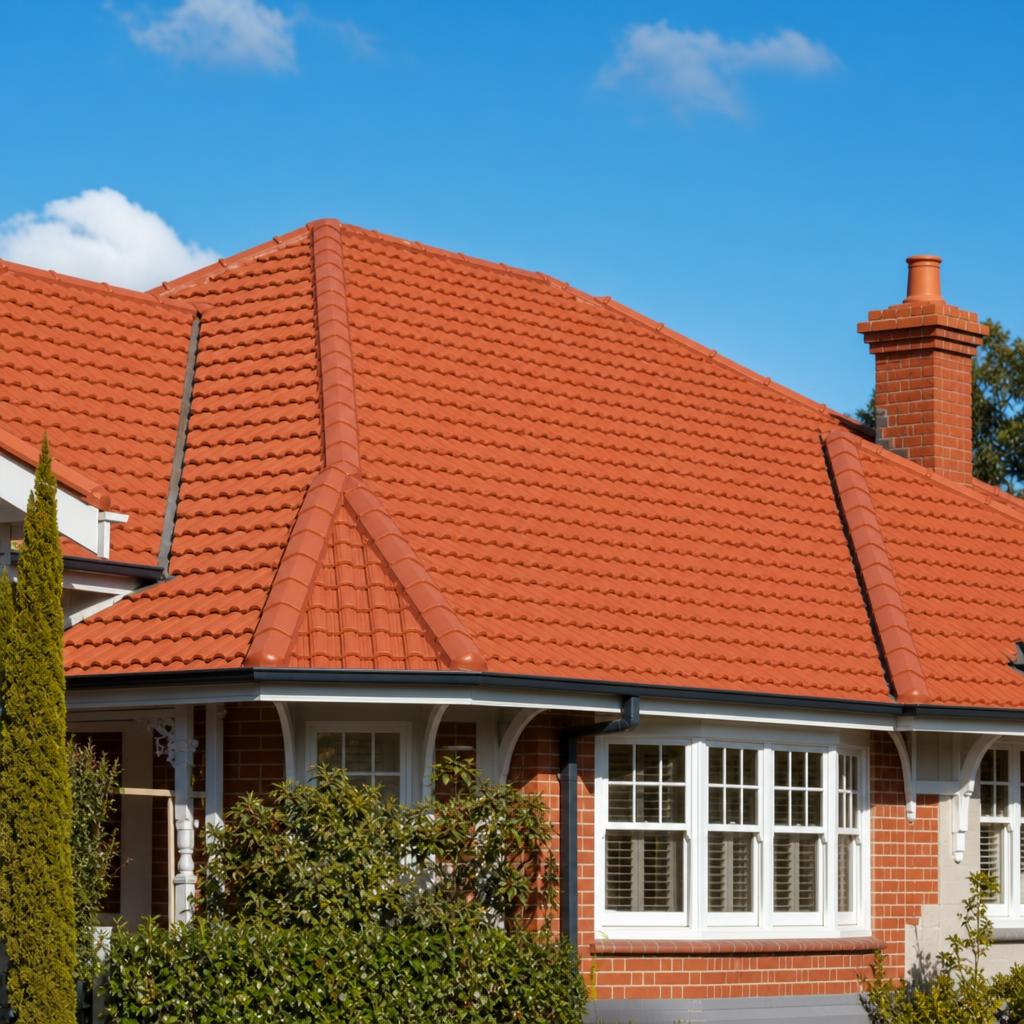
If you've got a tiled roof, take a look at the top edges — the horizontal ridge lines and the sloping hips that run down the corners. Sitting along those lines is a row of curved or angled tiles called ridge capping, and holding them in place is a bed of mortar. That mortar is doing a job most people never think about, right up until it starts crumbling into the gutter or a cap slides loose in a windstorm.
Ridge capping and repointing are two of the most common maintenance jobs on a tiled roof in NSW, and they're also two of the most misunderstood. People often hear the terms during a quote and aren't quite sure what they're paying for. So here's a plain rundown of what these caps do, how they're fixed, why the mortar fails, and how to know when yours genuinely needs attention.
What Ridge Capping Is and Why It Matters
Ridge caps are the tiles that cover the joins at the very top of the roof and along the hips. Underneath those joins, the field tiles don't quite meet — there's an open gap where two roof planes come together. The capping sits over that gap and stops wind-driven rain, leaves and vermin getting into the roof cavity. Without it, the ridge line would be one long opening straight into your ceiling space.
Because the caps sit right on the exposed spine of the roof, they cop the worst of the weather — the full force of the wind, the heaviest sun, and the sharpest temperature swings. That's exactly why the way they're held down matters so much.
Bedding vs Pointing — Two Different Layers
There are two separate bits of material working together here, and understanding the difference clears up a lot of confusion at quote time.
- Bedding is the thick mortar underneath the cap that props it at the right height and angle and holds it in position. Think of it as the foundation the cap sits on.
- Pointing is the finishing layer applied over the bedding along the edge of the cap. It's the visible strip you see from the ground, and its job is to seal and weatherproof the join.
- Modern flexible pointing is a rubberised compound that moves with the roof as it expands and contracts, rather than the rigid cement pointing used on older roofs that tends to crack.
What Repointing Actually Involves
Repointing is the process of removing the old, failed pointing and applying fresh flexible pointing over sound bedding. In many cases the bedding underneath is still solid, so it's the pointing layer that gets renewed. Where the bedding itself has broken down or caps have come loose, the caps are lifted, re-bedded and then re-pointed — a bigger job, but the right one if the mortar has really let go.
The reason flexible pointing has largely replaced traditional cement pointing is simple: roofs move. Timber framing swells and shrinks, the whole roof heats up and cools down every single day, and rigid mortar has no give in it. Over the years that movement, combined with sun and rain, cracks the old cement pointing apart. Flexible pointing flexes with the roof instead of fighting it, which is why it holds up far longer.
Signs Your Ridge Capping Needs Doing
You don't need to climb up on the roof to spot most of the warning signs. A lot of them are visible from the yard or turn up in the gutter.
- Cracked or crumbling mortar visible along the ridge and hip lines.
- Bits of sandy mortar or grey debris collecting in your gutters and downpipes.
- Ridge caps that look uneven, have shifted, or that you can see gaps beneath.
- A cap that has come loose or blown off entirely after a storm.
- Water stains appearing on ceilings near the top of the roof or along internal ridge lines.
- Weeds or moss taking root in the mortar joints, which speeds up the breakdown.
Any one of these on its own is worth a closer look. Several of them together usually means the pointing has reached the end of its life and it's time to act before a cap works loose in the next big blow.
Why You Shouldn't Put It Off
Failing ridge capping is easy to shrug off because it doesn't always cause an obvious leak straight away. But it's a genuine safety and weatherproofing issue. Loose caps can slide or lift in strong winds, and a tile cap coming off a two-storey roof is dangerous for anyone below. On the weatherproofing side, once the pointing cracks, wind-driven rain can be pushed up under the caps and into the cavity, leading to the same stains, mould and timber problems a flashing leak causes.
Sorting the pointing while the bedding is still sound is far cheaper and simpler than waiting until caps have shifted and the roof structure has taken on water. It's classic maintenance — small money now versus a much bigger repair later.
How It Fits Into a Roof Restoration
Repointing is very often done as part of a broader roof restoration. If the caps are being addressed, it usually makes sense to check the rest of the roof at the same time — broken tiles, valleys, flashings and the overall condition of the surface. Doing it all in one go means one set-up, one access arrangement, and a roof that's genuinely sorted rather than patched piece by piece. That said, repointing can absolutely be done on its own if that's all the roof needs. We won't push a full restoration if the caps are the only issue.
If you've noticed cracked mortar, debris in the gutters, or a cap that's shifted, the honest first step is to get someone up there for a proper look. We offer a free, no-obligation inspection where we'll check the bedding and pointing along your ridges and hips and give you a straight answer on whether it needs doing now or can wait. Give us a call on 0416 689 689.