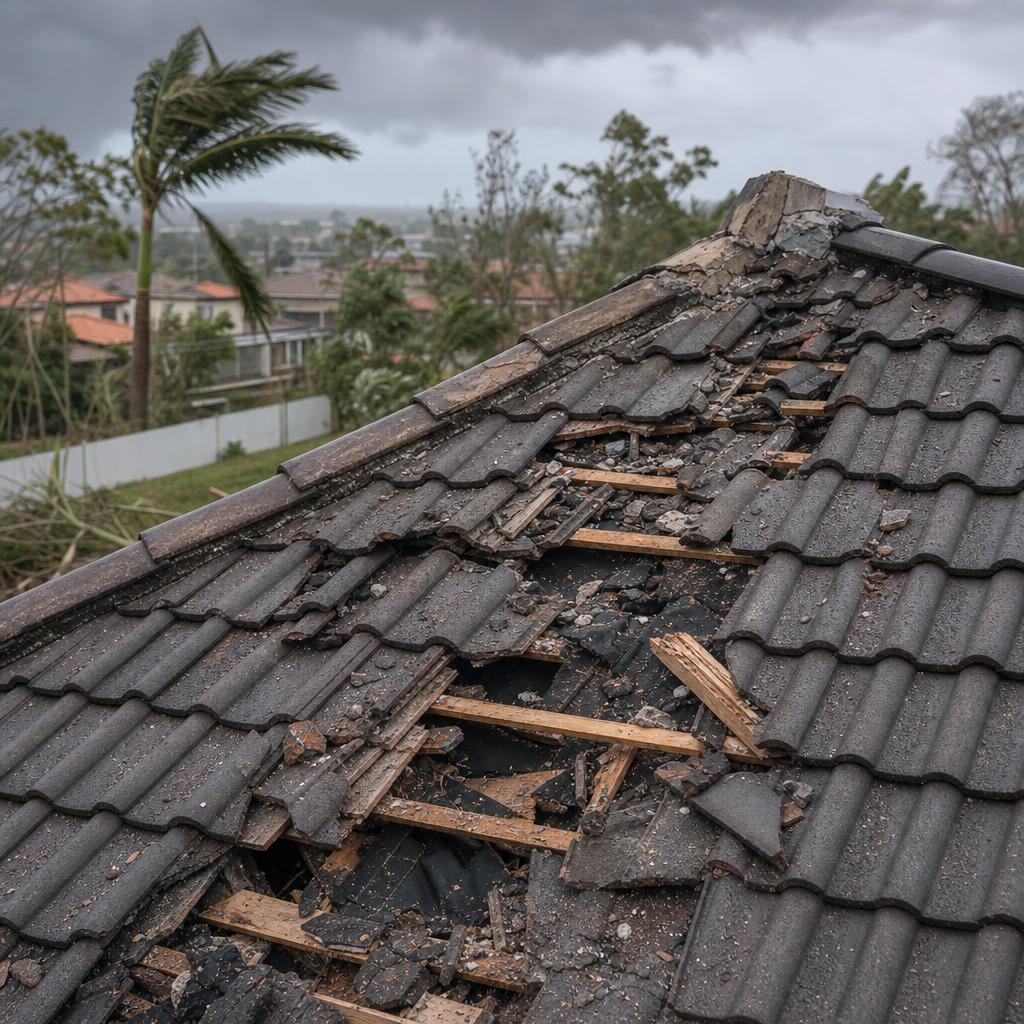
Sydney gets its share of serious hail. When a storm cell rolls through with stones the size of golf balls or bigger, it can do a lot of damage in a couple of minutes — and much of it isn't visible from your backyard. Roofs, gutters, skylights and solar panels all take a beating, and the trouble with hail is that a roof can look fine from the ground while quietly leaking a month later. This checklist helps you work out whether your roof came through unscathed or needs a proper look.
Start from the ground — safely
You don't need to get on the roof to spot the early warning signs, and after a storm you shouldn't. Walk around the house and look up. Check the ground and gutters for pieces of tile, granules that have washed off, or dents. Look at anything at ground level that also copped the hail — the car, the aircon unit, colourbond fencing, the letterbox. If those are dented, your roof almost certainly took hits too. That's your first clue that a closer inspection is worth it.
- Pieces of broken tile or roof debris in the gutters or on the ground
- Dents in metal gutters, downpipes, fascia covers or garden shed roofs
- Cracked, split or chipped tiles visible from an upstairs window
- Dents or bruising on colourbond and metal roofing sheets
- Damaged or cracked skylights and whirlybirds
- Granules or grit collecting at the bottom of downpipes
- Damage to your car, aircon unit or fencing as a proxy for roof impact
What hail does to tile roofs
Concrete and terracotta tiles crack and chip under a heavy hail hit. The damage is often on the upper face where you can't see it from below, and a hairline crack can be almost invisible until water starts working its way through. A lot of Sydney's older housing stock — the brick-and-tile homes across the inner west and the suburbs of the north shore — has tiles that have already weathered for decades, and older, more brittle tiles fracture more easily. Even a handful of cracked tiles scattered across a roof is enough to let water into the roof space over time.
What hail does to metal and colourbond roofs
Metal roofs are tough, but big hail still leaves its mark. You'll usually see dimpling or denting across the sheets, and while cosmetic dents don't always cause leaks, hail can chip or crack the protective coating. Once that coating is compromised, the steel underneath is exposed to the weather and rust can start. On flatter sections, dents can also create low spots where water pools instead of running off. Skylights, translucent roofing sheets and solar panels are the more fragile parts of a metal roof and are worth checking closely, as these are common weak points after a big storm.
Don't forget the gutters, flashings and valleys
Hail dents gutters and can knock flashings and ridge capping loose, and it flushes a lot of granule and debris down into the gutters and valleys. Blocked valleys and gutters cause their own leaks in the next downpour, so they're part of any post-hail check. If your gutters are full of grit and broken tile, that debris came from somewhere.
When to get a professional inspection
If you've ticked any of the boxes above, or if nearby homes and cars in your street clearly copped it, it's worth having the roof looked at properly and safely. A roofer can walk the roof, spot the cracked tiles and coating damage you can't see from the ground, and document everything for an insurance claim. We offer a free, no-obligation inspection — call 0416 689 689 and we'll take a look. Getting it checked soon after the storm also means any hidden damage is caught before it turns into a ceiling leak.
Hail damage is one of those problems that's cheapest and easiest to deal with early. A cracked tile replaced now is a minor job; the same crack ignored until it rots a rafter and stains a ceiling is a much bigger one.
Why hail hides its damage
The reason hail catches so many homeowners out is that its worst work happens where you never look. Stones strike the upper faces of tiles and the crowns of metal sheeting — the surfaces angled away from the ground. A hairline crack across the top of a tile is invisible from the yard, and even a chipped protective coating on colourbond can look like a harmless scuff. Water finds these weak points slowly, tracking through over weeks of ordinary rain, so the leak that appears in March can trace right back to a storm in January. On tiled roofs there's a second issue: hail can knock the sarking and bedding around, and a tile that's merely cracked rather than shattered often stays in place looking fine while quietly letting water past.
Acting quickly across Sydney's storm belt
Hail tends to hit in defined corridors, so an entire street or suburb can cop it while the next one over stays dry. If a cell has come through the western suburbs, the hills district or down through the eastern and southern parts of Sydney, whole pockets of homes will need checking at once, and demand for roofers spikes in the days afterwards. Getting your inspection booked early means you're not waiting weeks with hidden damage sitting on the roof through the next few downpours. It also means any make-safe work can be done before minor cracks turn into ceiling stains, and your insurance documentation is sorted while the evidence is fresh.