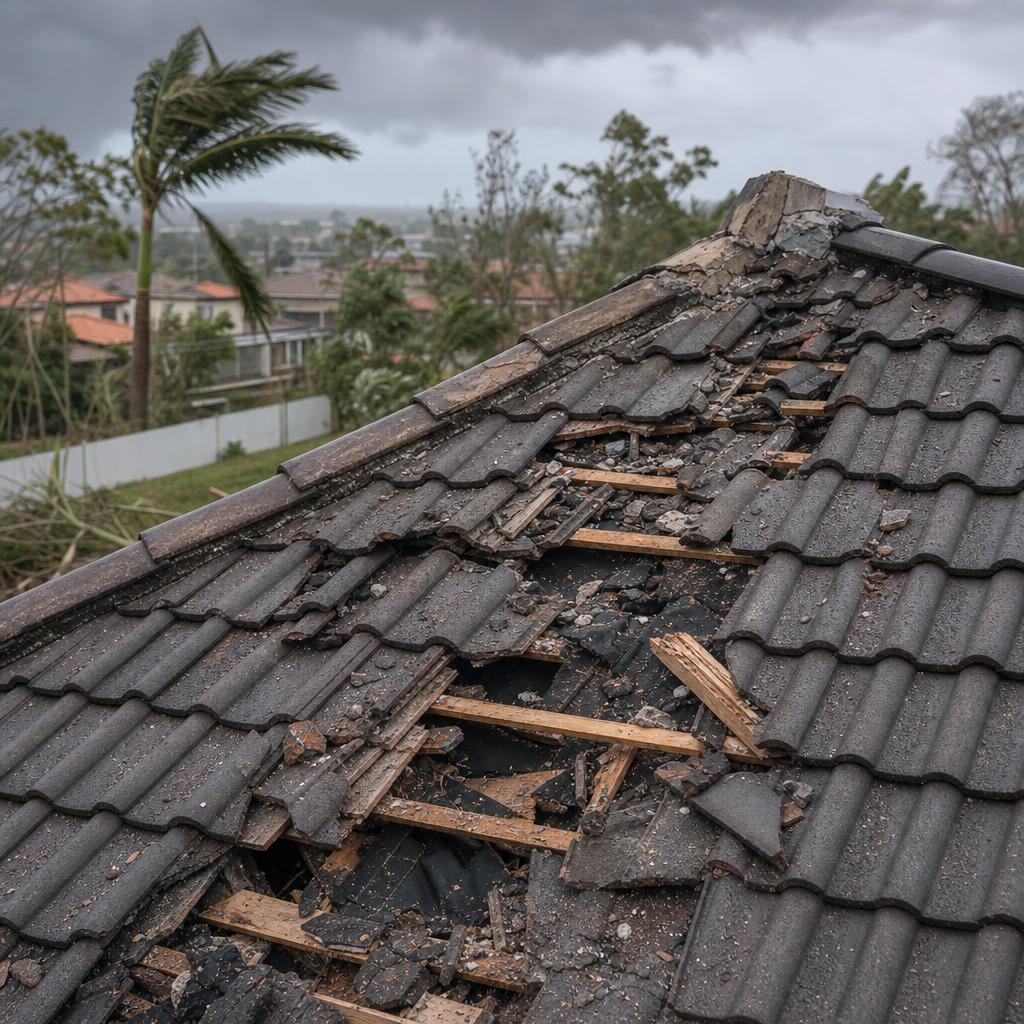
A big branch or a whole tree coming down on the house is one of the most alarming things a storm can throw at you. The noise, the sudden hole, the rain coming in — it's confronting. But the way you handle the first hour makes a real difference to how safe everyone stays and how smoothly the repair and any insurance claim go. The most important thing to know up front is what not to do, because the wrong move here can turn a property problem into an injury.
Get everyone out and stay out
A tree strike can compromise the roof structure well beyond the visible impact point. Rafters, trusses and walls may be under load or partly failed, and a roof that's holding for now can shift without warning. Get everyone out of the affected part of the house, and if the strike is significant, out of the house entirely until it's been assessed. Don't go back in for belongings while the structure is questionable.
Treat every situation as an electrical hazard
Falling trees frequently bring power lines down with them, or push branches into the lines running to your house. Assume any fallen tree or branch could be in contact with live wires. Stay well clear — at least the length of a bus — of any downed lines, and never touch a tree that's tangled with cabling. If lines are down or the power connection to your house is damaged, keep everyone away and call your electricity distributor's emergency line as well as emergency services if there's any immediate danger. Water pouring into a roof full of wiring is its own hazard, so if it's safe to reach the switchboard, turn the power off.
- Get everyone out of the affected area — or the whole house if the strike is major
- Assume downed wires are live and stay well clear; call your distributor if lines are down
- Call 000 if anyone is hurt, there's a fire risk, or the situation is unsafe
- Turn off power at the switchboard only if you can reach it safely
- Don't try to move the tree or climb on the roof yourself
- From a safe distance, photograph the tree, the roof and the damage inside
Don't try to move the tree yourself
It's tempting to grab the chainsaw and start cutting, but a fallen tree is often the only thing holding a damaged section of roof in place. Cut it wrong and the roof can drop further, or the trunk can spring and roll. Tree removal off a structure is specialist work, usually done by an arborist working alongside a roofer so the load is taken off carefully and the roof is stabilised as the timber comes away. Leave it to people with the right gear.
Stop the water once it's safe
Once the immediate dangers are handled and the tree has been safely removed or stabilised, the roof needs a make-safe — usually heavy-duty tarping — to keep the rain out until it can be repaired. This is not a job to attempt on a roof that's already structurally damaged; the surface may not hold your weight. A roofer will assess whether the roof can be walked, secure the opening, and protect the roof space, ceilings and contents from further water. Call us on 0416 689 689 and we can arrange an emergency make-safe.
Document everything for your claim
Tree-strike damage is usually a significant insurance claim, and good records help. From a safe distance, photograph the tree on the roof, the damage inside the house, and any affected contents before anything is moved or cleaned up. Keep any reports or invoices from the arborist and roofer. Contact your insurer early to understand how they want the claim handled — some coordinate the removal and repair, others ask you to arrange the make-safe and reimburse it. Either way, protecting the property from further damage comes first.
It's a rough day when a tree comes through the roof, but the order of priorities is clear: people first, then power hazards, then stopping the water — and always leaving the heavy, dangerous work to the people equipped to do it.
The hidden damage a tree strike leaves behind
Even after the tree is gone and the hole is tarped, the impact can leave problems you won't see straight away. A heavy branch coming down loads the roof structure like nothing it was designed for, and that force travels. Rafters and trusses can crack or pull away from their fixings, wall plates can shift, and gutters and fascia can be torn loose along the run, not just at the point of contact. Sometimes tiles well clear of the strike are cracked or dislodged by the shockwave and the debris. This is why a proper assessment after removal looks well beyond the obvious opening — a roof that appears patched and sound can still have compromised framing that needs attention before the permanent repair is signed off.
Preventing the next one
Once the crisis is over, it's worth thinking about the trees around your home. Large gums and other fast-growing species are common across Sydney's leafier suburbs, and in a strong storm it's often not the whole tree that comes down but a single heavy limb that's been dead or weakened for a while. Having mature trees inspected by a qualified arborist, and overhanging limbs pruned back from the roofline before storm season, is far cheaper than repairing a strike. It's not always possible — you can't control a neighbour's tree or a council street tree — but keeping your own trees healthy and clear of the roof genuinely reduces the odds of going through this again.