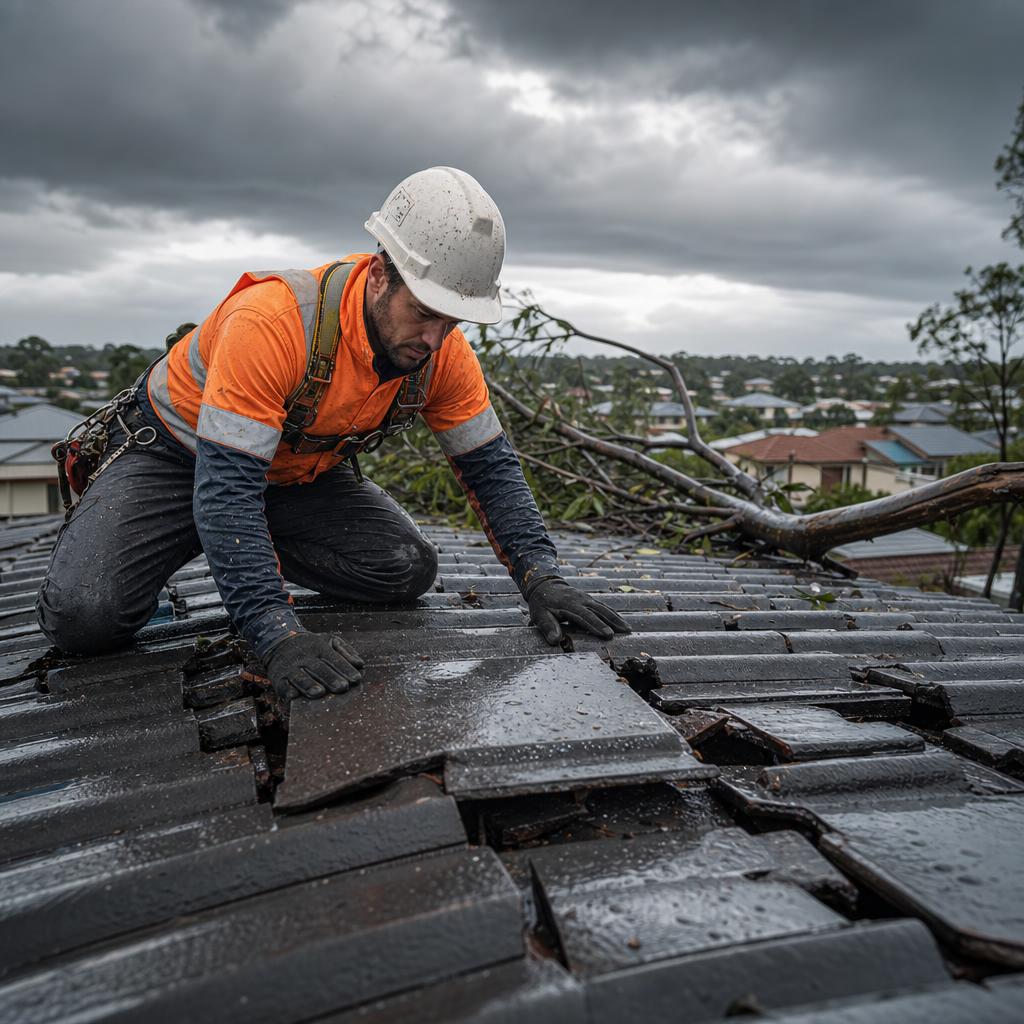
When a storm rips tiles off or peels back a section of metal roofing, the water doesn't wait for a convenient time. It runs straight into your ceiling, your insulation and your wiring. The job that stops that damage in its tracks is called a make-safe, and emergency roof tarping is usually the heart of it. It's a stopgap, not a repair, but a good one buys you days or weeks of protection while permanent work is organised.
A lot of people picture a tarp thrown over the roof with a few bricks holding the corners down. That approach fails the first time the wind picks up, and it can make the damage worse. A professional make-safe is a deliberate, methodical job. Here's what actually goes into one.
The first job is making the site safe to work on
Before anyone climbs up, the immediate hazards get assessed. A storm-hit roof can hide loose sheeting, cracked tiles that give way underfoot, and structural timbers that have shifted. If there are power lines down or wiring exposed to water in the roof space, that's an electrician's problem before it's a roofer's. A responsible crew won't send someone onto a roof that isn't stable, and part of the make-safe is deciding whether the roof can be walked at all or whether the work has to be done from a ladder, a harness or an elevated platform.
Finding where the water is really getting in
The obvious hole isn't always the whole story. Water travels along battens and rafters and can appear in your ceiling metres from where it entered. During a make-safe the roofer traces the water path, checks the surrounding area for cracked ridge capping, lifted flashings and blocked valleys, and works out how big the tarp needs to be to genuinely cover the problem. Tarping too small an area is one of the most common reasons an 'emergency fix' leaks anyway.
How a tarp is actually secured
This is where the craft comes in. A proper tarp is a heavy-duty grade, not a cheap camping tarp that shreds in an afternoon. It gets run well past the damaged zone in every direction, and critically, it's carried up and over the ridge where possible so water sheds down the outside rather than pooling. The edges are fixed with timber battens screwed down through the tarp, so wind can't get underneath and lift it like a sail. Every fixing point is a potential leak, so they're kept up-slope and sealed where needed.
- Heavy-duty tarp sized well beyond the damaged area, not just over the hole
- Timber battens screwed down along the edges so wind can't get under it
- Tarp carried over the ridge line where possible so water sheds away
- Fixings placed up-slope and sealed to avoid creating new entry points
- Loose and broken tiles or sheeting removed or secured so they don't blow off
- Photos taken of the damage for your insurance claim
Why the photos and documentation matter
Most storm damage ends up as an insurance claim, and insurers want evidence of what the roof looked like before and after the make-safe. A good roofer documents the damage clearly, notes what was done to stop further loss, and gives you an itemised record. Doing an emergency make-safe promptly also demonstrates you took reasonable steps to prevent additional damage, which is exactly what your policy expects of you. Sitting on a leak for a fortnight can complicate a claim.
A tarp is temporary, so what comes next?
A make-safe is designed to hold for days to a few weeks, depending on the weather and how exposed the roof is. It is not a repair. Once the panic is over, the roof needs a proper assessment in daylight and dry conditions so the permanent fix can be planned, whether that's replacing tiles and re-bedding ridge capping, patching or replacing metal sheeting, or renewing flashings. The tarp holds the line; the repair fixes the problem. If you're facing a fresh emergency, call us on 0416 689 689 and we'll talk you through the safest next step.
The honest takeaway is this: a make-safe done well is quiet, careful work that doesn't look dramatic but does the job. If yours looks like a bedsheet held down with a brick, it isn't going to protect your home the next time the sky opens up.
When is a make-safe actually needed?
Not every storm requires tarping, and a good roofer will tell you when it doesn't. A make-safe is warranted when there's active water entry or a real risk of it before the roof can be permanently repaired — tiles blown clean off, a section of metal sheeting peeled back, a hole punched through, or ridge capping and flashings so badly displaced that the next shower will pour straight in. If the damage is superficial and the roof is still shedding water, you may be better off going straight to a permanent repair rather than paying for a tarp you don't need. The judgement call comes down to how exposed the damage is and how soon the weather and scheduling allow a proper fix.
What to expect from a reputable emergency crew
Storms bring out plenty of door-knockers, and after a big blow it pays to be a bit choosy. A reputable crew turns up with proper access equipment and heavy-duty materials, explains clearly what they're doing and why, and separates the temporary make-safe from the permanent repair so you know exactly what you're paying for. They'll leave you with photos and a written description of the damage rather than a vague promise. Be wary of anyone pressuring you to sign for major roof work on the spot in the middle of a crisis — the make-safe stops the water, and that buys you time to get the repair assessed properly in daylight without being rushed into a decision you can't undo.