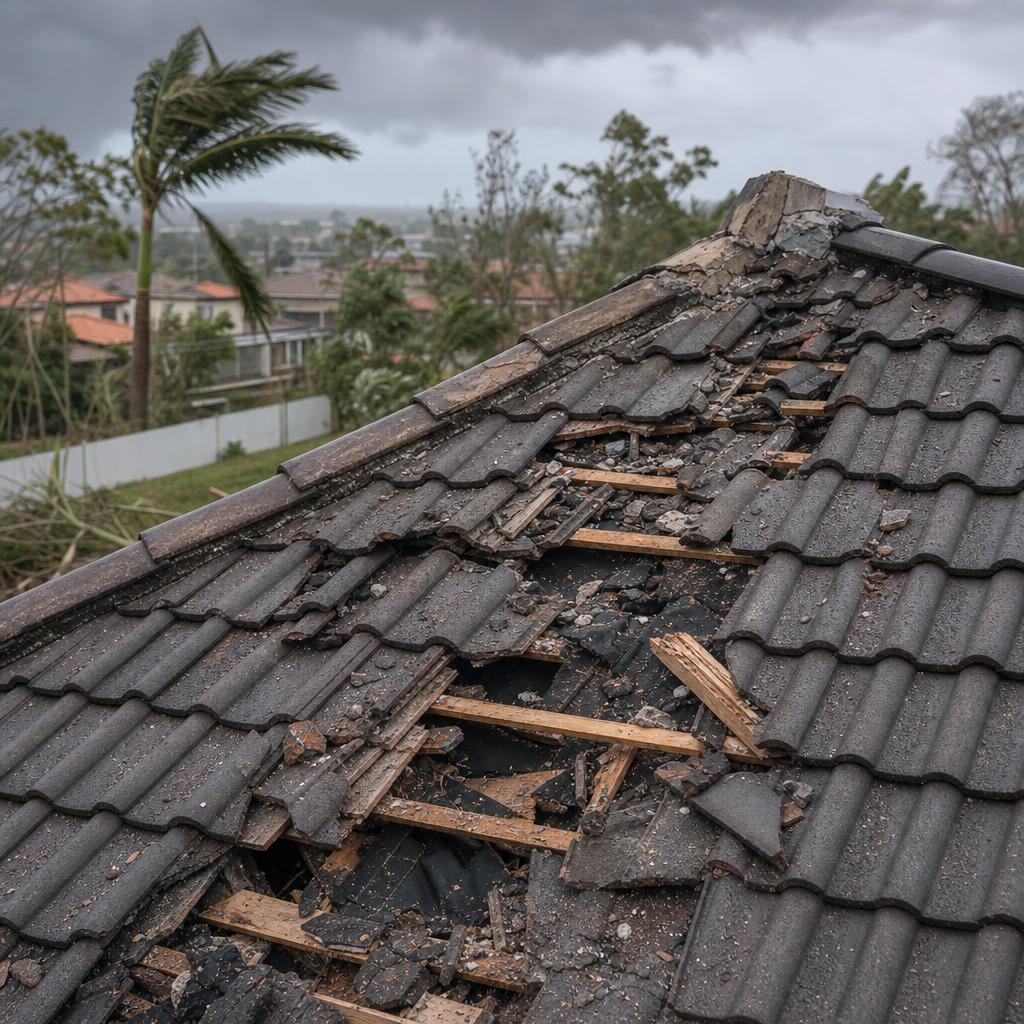
If you've lived through a Sydney winter or a wild stretch of autumn, you'll know the weather system that locals dread: the east coast low. These are the deep, slow-moving pressure systems that spin up off the New South Wales coast and sit there, hammering the region with rain and wind for days rather than hours. A quick summer thunderstorm tests a roof for twenty minutes. An east coast low tests it relentlessly, from every direction, until it finds the one spot that isn't quite right. Understanding how they work is the first step to keeping your home dry through the worst of them.
What Makes an East Coast Low Different
A regular downpour comes and goes. An east coast low is a different animal. It typically brings sustained heavy rain, strong onshore winds and, crucially, wind that shifts direction as the system moves. That combination is what makes them so hard on roofs. Rain doesn't just fall straight down — it gets driven sideways and even upwards under lapped sheets, tiles and flashings that would happily shrug off vertical rain. Add the sheer duration, and any weak point gets soaked long enough for water to work its way inside.
Sydney's exposed coastal and clifftop suburbs cop the wind hardest, but the wind-driven rain reaches well inland. It's not unusual for a home that's stayed dry through years of ordinary storms to spring a leak during a severe east coast low, simply because the rain has been pushed at an angle the roof was never really designed to handle.
The duration is the part that catches people out. A twenty-minute thunderstorm dumps a lot of water, but it passes before it can really test a roof's defences. An east coast low can sit over the region for two or three days, cycling through heavy bands of rain with barely a break. A flashing lap that would shed a short burst of angled rain can slowly wick water inwards over that many hours of constant wetting. Timber and mortar that stay saturated for days behave very differently to the same materials in a quick shower — and that's before you factor in the wind fatiguing every fixing and lap on the roof.
Where These Storms Find the Weak Spots
Roofs rely on gravity and overlaps to shed water. East coast lows attack exactly the places where that logic breaks down. The usual suspects are the joins and transitions rather than the open field of the roof.
- Ridge capping and flashings where wind can drive rain under the laps
- Valleys, where two roof planes funnel a huge volume of water at once
- Around skylights, chimneys, vents and anywhere the roof meets a wall
- Under-sized or leaf-choked gutters that overflow back into the eaves
- Cracked or slipped tiles and loose screws that let angled rain sneak in
The frustrating part is that many of these weaknesses are invisible in fine weather. A flashing that's fine in still air can leak the moment 60km/h gusts push water up and under it. That's why a roof can pass a casual glance from the ground and still let you down when the big system arrives.
How Sydney's Housing Stock Copes
Sydney has an enormous mix of housing, and each type has its own east coast low weak points. Older tiled homes across the middle-ring suburbs often have brittle mortar bedding on the ridges and hips that cracks over the decades, giving wind-driven rain an easy path in. Federation and interwar homes may still have their original valleys and flashings, which corrode over time. Newer metal roofs generally handle wind well, but rely entirely on their screws and sealed laps staying tight. Coastal homes of any age face the added challenge of salt air accelerating corrosion of every metal component. There's no single fix — the right preparation depends on what's over your head.
Preparing Before the Season Turns
The best time to storm-proof a roof is on a calm, dry day well before the forecast turns nasty — not in the middle of a warning. Preparation is mostly about removing the small faults that a big system would otherwise exploit.
- Have gutters and downpipes cleared so water can actually drain away
- Get ridge capping, flashings and valleys inspected and re-sealed if needed
- Replace cracked or slipped tiles and any obviously corroded sheets
- Trim overhanging branches that could drop debris or limbs onto the roof
- Book a professional inspection if your roof hasn't been checked in years
Clearing gutters deserves a special mention. In an east coast low, the volume of water is immense, and a gutter half-full of leaves simply can't cope. It overflows, and because the wind is pushing everything about, that overflow often ends up back under the eaves and into the wall cavity rather than harmlessly onto the ground. Free-flowing drainage is one of the cheapest and most effective defences you have.
During and After the Storm
When a severe low is actually over you, stay inside and off the roof. If a leak appears, manage the water indoors and keep clear of anything electrical, then note where it's coming through — that information is gold for the roofer who repairs it later. Once the system has passed, a proper inspection is worth doing even if you didn't see any leaks, because storm damage like lifted flashings or loosened screws can go unnoticed until the next big blow. Catching that early is far cheaper than dealing with the leak it will eventually cause.
If your roof took a beating in the last east coast low, or you'd rather get it storm-ready before the next one, give Roofing Experts Australia a call on 0416 689 689 for a free, no-obligation inspection across Sydney and NSW.