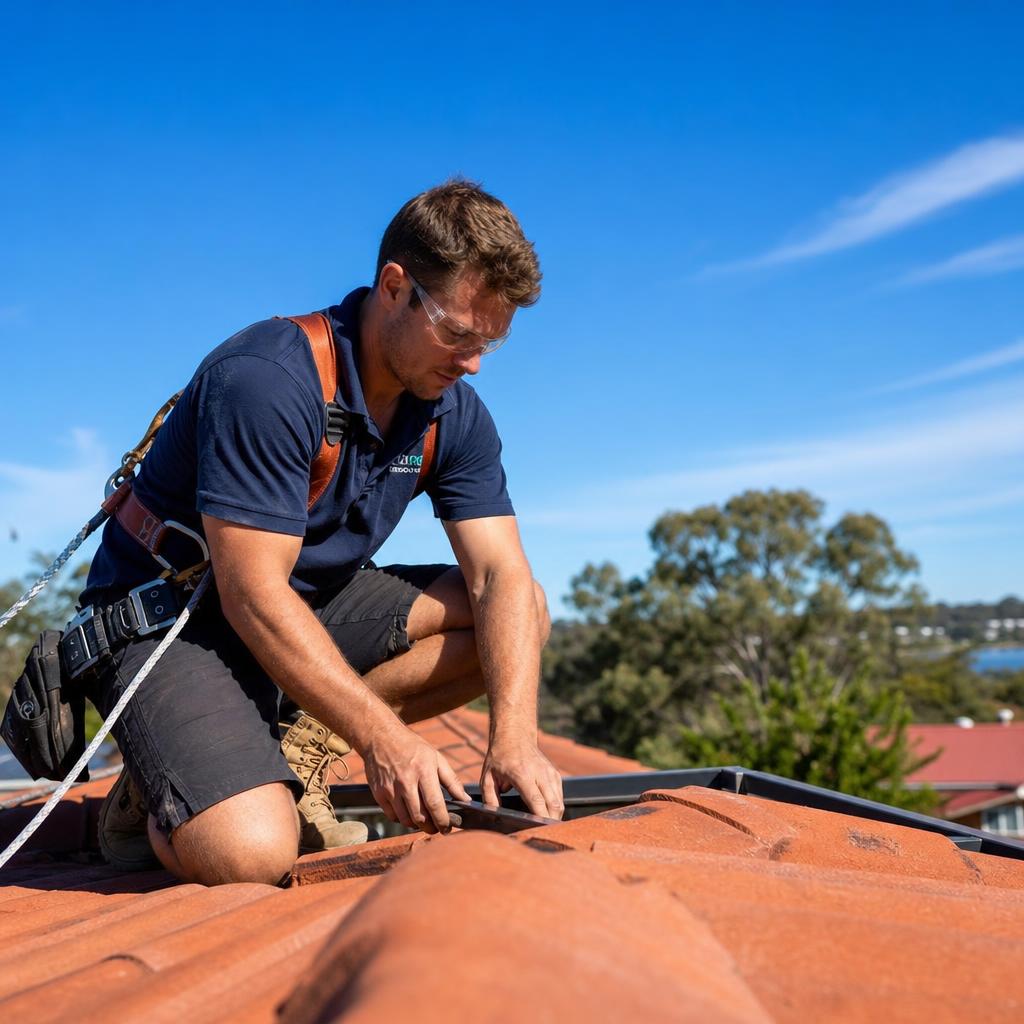
There's a lot to admire about the have-a-go attitude. Plenty of jobs around the house are genuinely worth tackling yourself, and it feels good to sort a problem without waiting on a tradie. The roof, though, is one of those places where a well-meant DIY fix can quietly make everything worse. We've been called out to more than a few roofs where the original leak was minor, and the real damage was caused by the repair someone attempted before they rang us.
This isn't about talking anyone out of understanding their own home — the more you know about what's happening up there, the better. It's about the specific mistakes that turn a modest issue into an expensive one, and the reasons a licensed roofer usually ends up being the safer and cheaper route. If you're standing at the bottom of a ladder weighing up whether to climb it, this is worth a read first.
Mistake One: The Wrong Sealant Over Flashings
By far the most common DIY roof repair we see is a tube of sealant emptied over a flashing that's actually failed. It's an easy trap to fall into. The join looks like the problem, the sealant looks like the answer, and for a little while the leak stops. The trouble is that flashings are meant to shed water on their own through the way they're formed and lapped. Once a flashing has corroded, lifted or been detailed poorly, a smear of sealant is only hiding the fault, not fixing it.
Sealant also moves and cracks with heat, cold and the natural expansion of the roof. A bead that looked solid in autumn can split by the following summer, and the water finds its way straight back in — often to a spot you'd never connect to the original repair. Worse, the sealant now has to be cut and scraped away before the flashing can be replaced properly, which adds time and cost to the eventual fix. Using the wrong product on the wrong problem is how a straightforward flashing repair becomes a much bigger one.
Mistake Two: Walking on Tiles Like They're a Footpath
Roof tiles look sturdy from the ground, and in the right spots they are. But they're not designed to be walked on freely, and there's a real skill to knowing where a tile is supported and where it will crack under your weight. Concrete and terracotta tiles both break in ways that aren't always obvious — a hairline crack can look like nothing until the next downpour drives water straight through it.
We regularly find roofs where someone went up to clear a gutter or check a single tile and came down having quietly cracked half a dozen more on the way. The original job might have been a ten-minute fix. Now there's a scatter of damaged tiles that all need replacing, and the leaks they cause can take weeks to show themselves. A roofer knows how to distribute their weight, where to step and how to move across a roof without leaving a trail of damage behind them.
Mistake Three: Silicone on Absolutely Everything
Silicone has a reputation as the universal fix, and it gets used that way on roofs all the time. Cracked tile? Silicone. Gap around a vent? Silicone. Suspicious-looking join? More silicone. The problem is that a roof is a system designed to move water downhill through overlaps, falls and properly formed details. Blobbing silicone across it doesn't work with that system — it fights it, and often traps water in exactly the places that were meant to drain.
The wrong sealant in the wrong place can also react badly with certain roofing materials, and it makes a proper repair harder down the track because it all has to be removed first. There are places where the right sealant, applied correctly, is part of a legitimate repair. Knowing where those places are — and where sealant is the wrong tool entirely — is the difference between a fix that lasts and one that just delays the problem while quietly adding to the eventual bill.
Mistake Four: Pressure-Washing Tiles
A pressure washer feels like the perfect way to blast years of grime and moss off a tired-looking roof, and the before-and-after is genuinely satisfying. But a pressure washer in inexperienced hands is rough on a tiled roof. Too much pressure, or the wrong angle, can strip the protective surface off older tiles, force water up under the laps and into the roof cavity, and dislodge or crack tiles that were perfectly fine before.
The water going where it shouldn't is the part people don't see. A roof is built to keep out rain falling from above, not a jet of water driven upward under the tiles from a wand held at the wrong angle. We've seen roofs that leaked for the first time ever the week after a keen weekend pressure-wash. Cleaning a roof properly is worth doing, but it's a job that rewards the right technique and pressure — and knowing when a roof is too fragile to clean that way at all.
Mistake Five: Working at Height Without Safety Gear
This is the one that matters most, because it's the one that can't be undone. Falls from height are among the most serious injuries that happen around the home, and a roof combines everything that makes a fall likely: slope, loose footing, awkward angles and the temptation to reach just a little further. A dew-damp roof in the early morning is far slipperier than it looks, and a single misstep near the edge doesn't give you a second chance.
Professional roofers work at height every day with proper harnesses, anchor points, edge protection and the training to use them. It's not that they're braver — it's that they've made the risk manageable. A homeowner on a borrowed ladder in thongs, holding a tool in one hand, has none of that. No roof repair is worth a fall, and the money saved on a DIY fix means nothing if it lands you in hospital. This alone is the reason many people, quite sensibly, decide the roof is a job to leave to someone equipped for it.
Mistake Six: Misreading What the Problem Actually Is
Underlying most DIY roofing mishaps is a simple but costly error of judgement: fixing what you can see rather than what's actually wrong. A roof is a system, and the visible symptom is frequently a long way from the real fault. A stain in one corner of the ceiling can come from a problem several metres away, where water has entered and then tracked along a batten before dropping through. Treat the spot beneath the stain and you've fixed nothing — you've just spent an afternoon addressing the wrong thing.
This is where experience earns its keep. A roofer doesn't start by patching; they start by working out how the water is getting in and where it's travelling, then treat the cause. That diagnostic step is the part that's almost impossible to do well without having seen hundreds of roofs, and it's the part a DIY fix skips entirely. Chasing symptoms up a ladder is a good way to spend money and time while the real fault carries on doing damage — and it's one of the strongest reasons to have someone experienced take a proper look before anyone starts repairing anything.
Why the Professional Path Is Usually the Cheaper One
It sounds back to front, but hiring a licensed roofer often costs less than the DIY version once you follow the whole thing through. A DIY attempt that goes wrong doesn't just fail — it leaves a mess that has to be undone before the real repair can start.
- A roofer diagnoses the actual source of the problem rather than treating the spot where water happens to appear, which is frequently nowhere near the real fault.
- The right materials and techniques mean the repair lasts, instead of failing the next season and needing doing again.
- There's no collateral damage from cracked tiles, trapped water or stripped surfaces added to the original job.
- A licensed, insured roofer carries the risk of the work, so a slip or a mistake isn't your problem to pay for.
- You keep both feet on the ground, which is worth more than any saving on a quote.
None of this means every homeowner who climbs a ladder is heading for disaster. Plenty of small, ground-level checks are perfectly reasonable to do yourself. But the actual repair work — the sealing, the tile replacement, the flashing, the cleaning — is where experience, the right gear and proper safety make for a far safer, more controlled job.
Get a Straight Answer Before You Climb the Ladder
If you've spotted something on your roof and you're weighing up whether to have a crack at it yourself, the safest first step costs nothing. We offer a free, no-obligation roof inspection where we'll take a proper look, tell you honestly how serious the issue really is, and explain what a proper repair involves. Sometimes it's smaller than you feared, and sometimes it's the kind of job you'll be very glad you didn't tackle from a wobbly ladder.
Either way, you'll know exactly where you stand before you spend a cent or set foot on the roof. Give us a call on 0416 689 689 and we'll come and have a look. There's no pressure and no sales pitch — just an honest assessment from someone who does this safely every day.