A ceiling that's sagging, bulging or dripping is holding a surprising amount of water above your head. Plasterboard soaks it up until the weight becomes too much, and when it lets go it can come down in a heavy, sodden slab with no polite warning. This is one of the few roofing situations where the next half hour genuinely matters. The good news is the steps to make it safe are simple, and you don't need any special gear.
Get everyone out from underneath it
First move: clear the room. Get people and pets out of the space directly below the bulge, and keep them out. A saturated section of ceiling can weigh far more than it looks, and a falling plasterboard sheet with wet insulation attached can cause a real injury. Don't stand under it to take photos or poke at it — do that later, from a safe angle.
Kill the power to that part of the house
Water and electricity in a ceiling cavity are a dangerous mix. Downlights, junction boxes and wiring often sit right where the water is pooling. If you can safely reach your switchboard, turn off the power to the affected area or the whole house. Do not touch light switches, downlights or any fitting in the wet zone, and if anything is sparking, buzzing or the water is near the meter box, stay well clear and call an electrician. If in doubt, leave the power off until a professional has checked it.
Relieve the water — carefully
This feels counterintuitive, but a controlled release is safer than letting the ceiling collapse on its own. Once the power is off and you're sure there's no wiring right at the bulge, place a large bucket or bin underneath and use a screwdriver or something similar to make a small hole at the lowest point of the sag from a safe angle — ideally from the side, not directly underneath. The trapped water drains into the bucket, the pressure comes off the plasterboard, and you take away the risk of a sudden collapse. Have a few buckets ready; it can be more water than you expect.
- Clear people and pets from directly below the bulge
- Turn off power to the affected area at the switchboard if it's safe to reach
- Move furniture, electronics and valuables out of the room
- Put down buckets or bins and lay towels or old sheets to catch splashes
- From a safe side angle, pierce the lowest point of the sag to drain water in a controlled way
- Photograph the damage once things are safe, for your insurance claim
Protect what you can and start drying out
While the ceiling drains, shift furniture, rugs and anything electronic out of the room and roll back carpet if water is spreading across the floor. Open windows and get some airflow moving to help things dry. The quicker you dry the space, the less chance you'll be dealing with mould in the weeks that follow — damp plaster and timber in a Sydney summer can grow mould fast.
Then get the actual leak found and fixed
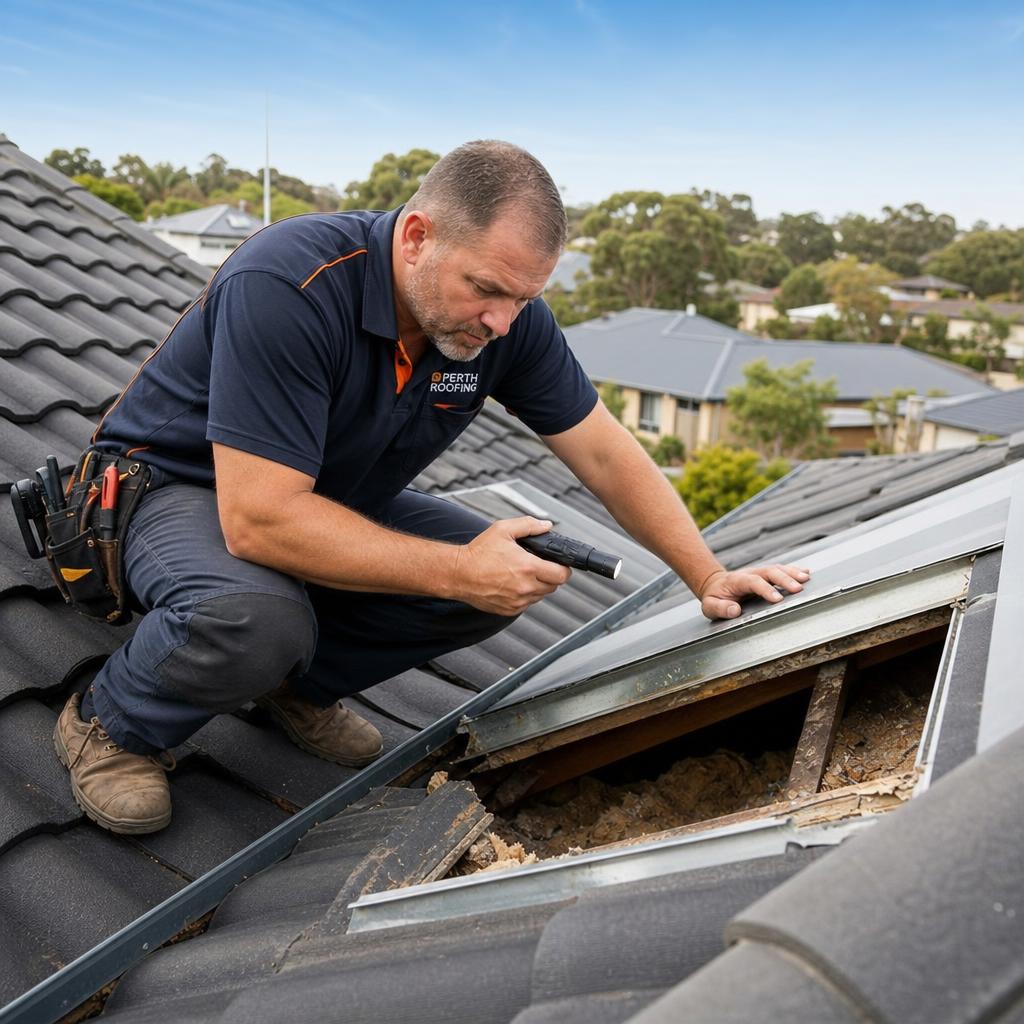
Draining the ceiling stops the immediate danger, but the water is coming from somewhere on the roof — cracked tiles, failed flashing, a blocked valley or gutter, or a split in metal sheeting. Until that's found and fixed, the next rain does it all again. This is where proper roof leak detection earns its keep, because the entry point is often nowhere near the stain on your ceiling. Call us on 0416 689 689 and we can arrange a make-safe to stop further water while the source is tracked down and repaired.
Keep the damaged plasterboard section in mind too. Once it's been soaked it usually needs replacing rather than just drying out, and a roofer or builder can advise whether the sheet has to come down. But that's tomorrow's job. Tonight, the priority is simple: get out from under it, kill the power, and let the water down safely.
How much water can a ceiling really hold?
People underestimate this every time. Plasterboard is like a sponge — it draws water in and holds it, and the insulation batts sitting on top of the ceiling soak up plenty as well. A modest bulge the size of a dinner plate can be holding several litres, and by the time the sag is obvious there can be a lot more than that sitting up there. That's why a slow drip you shrugged off yesterday can become a bulging, sagging ceiling overnight during a big rain event. The water builds silently in the cavity and only shows itself once the plasterboard can't cope. If you notice a ceiling starting to discolour, blister or bow during heavy rain, treat it as a developing problem rather than waiting to see how bad it gets.
What not to do in the panic
In the rush it's easy to make things worse. Don't climb into the roof space to investigate while water is pouring in and the ceiling is loaded — the ceiling joists may be fine but the wet plasterboard between them won't take your weight, and there's live wiring up there. Don't push up on the bulge to 'test' it; you'll only speed up the collapse. And don't leave power on to the affected rooms on the assumption it'll be fine — downlights sitting in wet insulation are a genuine fire and shock risk. Slow down, work through the steps in order, and if any part of it feels unsafe, back off and get help.