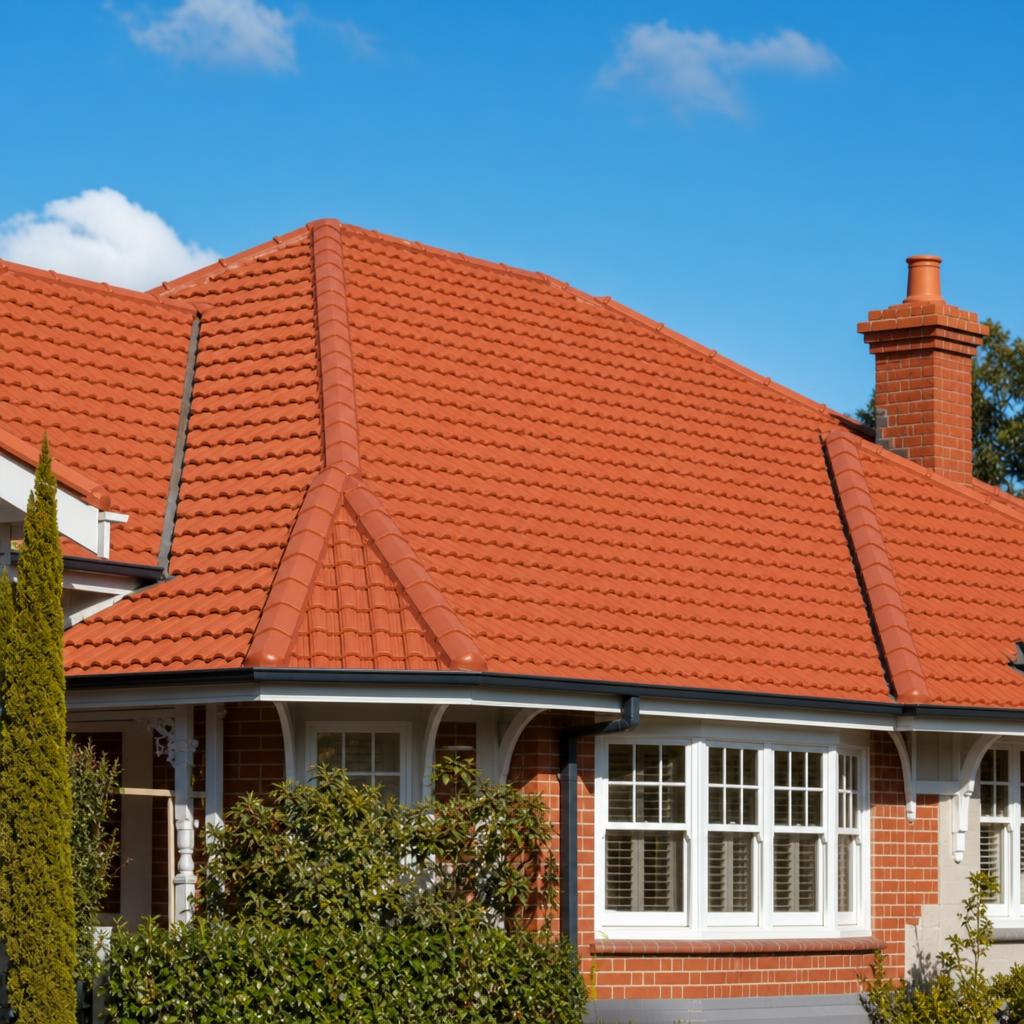
Tiled roofs are everywhere in Sydney and across NSW, and for good reason — concrete and terracotta tiles last a long time and cop plenty of weather before they complain. But no roof lasts forever, and one of the most common calls we get is from homeowners who've spotted a broken or slipped tile and aren't sure whether it's a quick fix or the start of a bigger job. The honest answer is: it depends on what caused the damage, how old the roof is, and how many tiles are affected. This guide walks you through how we make that call so you can weigh up your options with clear eyes.
The good news is that a single cracked tile is rarely a crisis. Tiles are individual pieces, so a broken one can usually be swapped out without touching the rest of the roof — provided you can still source a matching tile. The trickier question is whether that broken tile is a one-off or a symptom of something bigger going on underneath.
What Actually Breaks a Roof Tile
Tiles don't just crack for no reason. Understanding the cause tells you a lot about whether a repair will hold. Falling branches and stormy weather are the obvious ones — a decent hailstorm or a limb coming down in a southerly buster can crack several tiles at once. But plenty of tile damage is caused by people, not weather. Foot traffic from tradies walking carelessly, antenna installers, or even a previous roofer stepping in the wrong place can hairline-crack a tile that later fails.
- Storm and hail damage — often clustered in one area or along one pitch
- Falling branches and debris, common on tree-lined blocks
- Foot traffic from trades who didn't step on the tile batten line
- Age and weathering — terracotta and concrete both grow brittle over decades
- Movement in the roof structure that stresses tiles at fixed points
- Frost and thermal cycling working on tiles that were already porous
When a Repair Is the Right Move
If you've got a handful of broken tiles on an otherwise sound roof, a repair is almost always the sensible choice. We can lift the damaged tiles, check the sarking and battens underneath, and slot in replacements. As long as matching tiles are available — either from your own spare stock, a salvage yard, or a current manufacturer's range — the repair blends in and does the job for years. A localised repair is also the right call after a specific event like a storm, where the rest of the roof was fine the day before.
We'll also usually recommend re-bedding and re-pointing the ridge capping while we're up there if the mortar is cracked or crumbling, because that's a far more common leak source than the tiles themselves. Repairs make sense when the underlying roof structure is solid and the tile field is generally in good nick.
When Replacement or Restoration Makes More Sense
There's a point where patching tile after tile stops being economical. If you're finding new cracks every few months, if a big share of tiles are delaminating or flaking, or if matching tiles simply can't be sourced anymore, you're throwing good money at a roof that's near the end of its serviceable life. Older terracotta in particular can reach a stage where it's so porous and brittle that walking on it to do a repair creates more breakages than you fix.
In those cases we'll talk you through the two honest options: a full re-roof, or a roof restoration where the tiles are cleaned, broken ones replaced, ridge capping re-bedded and re-pointed, and the whole lot recoated to extend its life. Restoration is often the middle ground — cheaper than a re-roof, and it buys you a good stretch of extra years if the tiles themselves still have integrity. What we won't do is tell you a roof needs replacing when a repair would genuinely do.
The Sarking Underneath Tells the Real Story
Here's something a lot of homeowners don't realise: the tiles are only half the waterproofing system. Beneath them sits the sarking — a foil or membrane layer that catches any water that slips past the tiles and directs it out to the gutter. On newer roofs the sarking is doing quiet, unglamorous work every time it rains. When we lift a broken tile, the condition of that sarking underneath is often what tips the decision from repair to restoration.
If the sarking is intact, a tile repair is genuinely a repair — swap the tile, job done, no water was getting past anyway. But if the sarking is torn, brittle, sun-perished from decades of exposure, or missing entirely (common on older Sydney homes), then every broken tile has been letting water straight onto the battens. In that situation a few new tiles won't fix the real problem, and it's worth having an honest conversation about re-sarking as part of a larger job rather than repeatedly patching the surface.
How We Assess a Tiled Roof Before Quoting
When we inspect a tiled roof we're not just counting broken tiles. We're reading the whole picture so we can give you a recommendation you can trust rather than a knee-jerk sales pitch. A few cracked tiles on a sound roof with good sarking and solid capping is a repair, full stop. A roof shedding tiles across multiple pitches, with perished sarking and crumbling mortar, is a different conversation. We'll always tell you which one you've got.
- How many tiles are broken, and whether the damage is clustered or spread across the roof
- The overall condition and porosity of the remaining tiles
- Whether the sarking underneath is intact or perished
- The state of the ridge and hip capping mortar
- Whether matching replacement tiles can still be sourced
- Signs of past leaks — stained battens, damp timber or mould in the roof cavity
The Hidden Cost of Ignoring Broken Tiles
A cracked tile might look harmless, but its whole job is to shed water. Once one is broken or slipped out of place, rain gets past it onto the sarking — and if the sarking is old, torn or absent, water reaches the timber battens and ceiling below. That's how a five-minute repair turns into a rotten batten, a stained ceiling, or mould in the roof cavity. The tiles are your first line of defence, so the sooner a broken one is dealt with, the smaller the eventual bill.
If you're not comfortable getting up there yourself — and honestly, most people shouldn't be, because tiled roofs are slippery and easy to damage — give us a call on 0416 689 689 for a free, no-obligation inspection. We'll tell you straight whether you're looking at a repair, a restoration, or a replacement, and why.