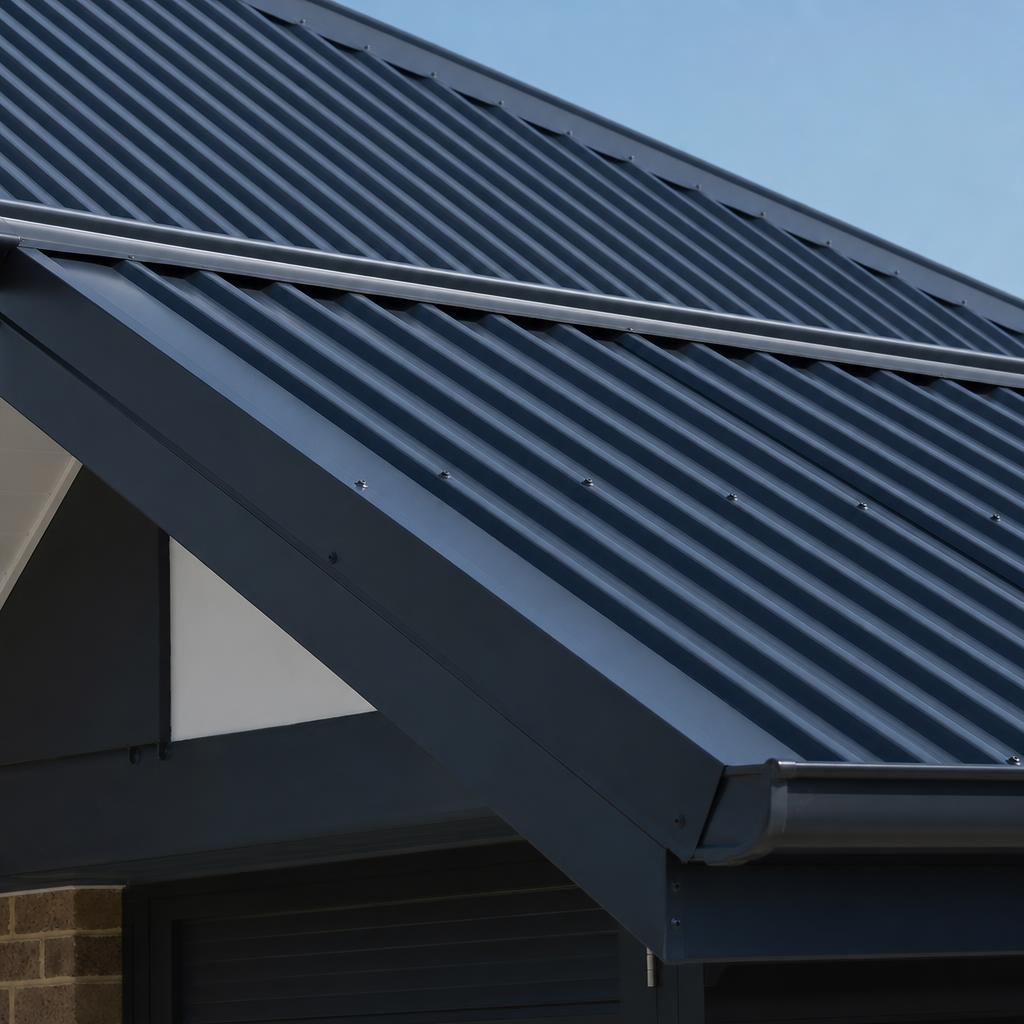
Zincalume and Colorbond are two names you will hear thrown around any time metal roofing comes up, and plenty of people use them as if they mean the same thing. They do not. They are closely related — one is literally built on top of the other — but the difference matters when you are choosing a roof, matching an existing one or working out what that silvery shed roof down the back actually is. Here is the plain-English version.
Understanding the relationship between these two products clears up a lot of confusion, and it helps you make sense of what a roofer is quoting you. Neither is better in every situation. They just suit different jobs.
What Zincalume Actually Is
Zincalume is a steel sheet with a metallic coating made mostly of aluminium and zinc, with a little silicon. That coating is what protects the steel underneath from corrosion. The finished product has a distinctive bare metallic look — bright silvery when new, weathering to a softer matte grey over time. It has no paint. What you see is the raw coated steel, and that is exactly how it is meant to be used.
That aluminium-zinc coating is a genuine step up from the old plain galvanised (zinc-only) roofing that came before it. It gives the sheet strong corrosion resistance for the money, which is why you see it so often on sheds, garages, carports, patios and plenty of no-fuss house roofs where the unpainted metallic look is perfectly acceptable.
What Colorbond Adds on Top
Here is the key point that ties it all together: Colorbond is Zincalume steel with a factory-baked colour coating applied over it. Underneath every Colorbond sheet is the same aluminium-zinc coated steel base. Colorbond takes that base, adds a pre-treatment and primer, then a durable oven-cured paint finish in a wide range of colours. So Colorbond is not a rival material to Zincalume — it is the next step in the same production line.
That paint layer does two jobs. It gives you the colour, obviously, and it adds another protective barrier over the metallic coating. On many of the colours it also brings solar-reflective properties that help reject summer heat, which bare Zincalume does not offer in the same way.
How Each One Ages
The two products weather quite differently, and this is often what settles the choice for people. Bare Zincalume starts out bright and silvery, then dulls over the years to a soft matte grey as the surface weathers. Most people find that ageing perfectly acceptable on a shed or workshop, but on a house it can look a touch industrial once the shine goes. Colorbond, on the other hand, holds its colour for a long time thanks to the baked-on finish, though like any paint it will very gradually soften over decades of Sydney sun.
There is also the question of touch-ups and repairs. A scratch on Zincalume simply exposes more of the same metallic coating and blends in over time. A deep scratch through a Colorbond finish is more noticeable because it breaks the colour, though the metallic coating underneath still protects the steel. Neither is a dealbreaker — it is just useful to know how each will look as the years tick over.
So Which One Should You Choose?
This is where it comes down to the job in front of you rather than one product winning outright. Both are quality options; they are simply pitched at different needs.
- Choose Zincalume when the bare metallic look is fine — sheds, garages, carports, workshops and utilitarian roofs.
- Choose Colorbond when you want a specific colour to match or complement the house.
- Lean to Colorbond if summer heat is a concern and you want a solar-reflective colour.
- Consider Colorbond where the roof is highly visible from the street and kerb appeal matters.
- For coastal exposure, check the recommended grade regardless of which product you pick.
A practical example: on a house roof that everyone sees, most owners go Colorbond for the colour and the heat performance. On a big shed at the back of the block, Zincalume often makes perfect sense and saves the cost of a paint finish nobody was going to appreciate anyway. Some owners even mix the two across a property — Colorbond on the house, Zincalume on the outbuildings — which is a sensible way to spend the budget where it shows. It is horses for courses, and there is no prize for over-specifying a roof nobody looks at.
Matching an Existing Roof
It is also worth knowing that both are sold in the same range of profiles, so the corrugation or rib pattern is not what tells them apart — the presence of colour is. That means a Zincalume shed and a Colorbond house can share an identical profile and still look completely different, purely because one is painted and one is not. Keep that in mind when you are trying to identify what is already on your roof from the ground.
One place the difference really bites is when you are extending or repairing an existing metal roof. If your current roof is unpainted Zincalume, patching it with a coloured Colorbond sheet will stand out like a sore thumb, and vice versa. Even within Colorbond, colours have been added and retired over the years, so matching an older roof exactly can take some care. When we quote a repair or an extension, identifying what is already up there is the first step so the new work blends in rather than announcing itself.
If you are looking at your own roof and cannot tell what it is, or you are weighing up which to use on a new project, we are happy to sort it out with you. Call 0416 689 689 for a free, no-obligation inspection and a straight recommendation.