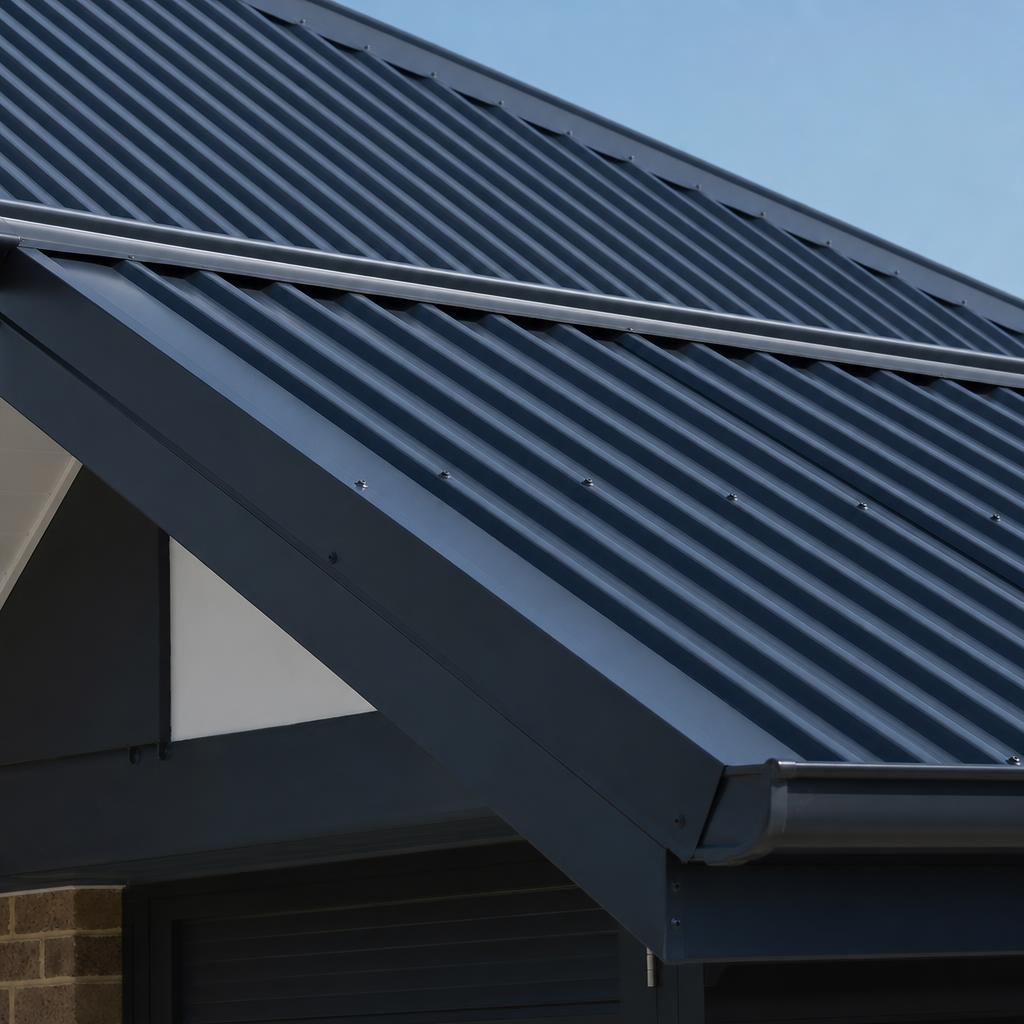
Standing-seam roofing joins metal panels along raised seams, with concealed fixings beneath the weather surface. That clean appearance can suggest there is little to maintain. In practice, drainage, flashings, penetrations and the panel movement arrangement still need attention, particularly after other trades have worked on the roof.
Movement is part of the system
Long metal panels expand and contract as their temperature changes. The specified clips and fixed or sliding arrangements manage that movement. A repair or attachment that restrains a panel in the wrong place can create stress at seams, edges or penetrations. There is no universal clip layout suitable for every panel length and metal.
Standing seam also describes several systems rather than one interchangeable product. Snap-locked and mechanically seamed profiles have different installation requirements. Identify the installed system before choosing a repair method, adding equipment or assuming a particular minimum roof pitch is acceptable.
The standing seam roofing service considers seam type, concealed clips and movement allowance as part of the roof specification.
What owners can observe safely
- New water stains inside after roof or equipment work.
- Changes in visible panel shape or lifted edge details seen from ground level.
- Debris collecting at gutters or outlets.
- New noises or movement patterns, described without climbing onto the roof.
- Dates and scopes of any solar, ventilation or antenna installation.
Slight waviness in a flat metal panel can be a visual characteristic, often called oil canning, and is not by itself proof of a leak or failed installation. New distortion, displaced seams or water entry warrant assessment. Ask the roofer to distinguish appearance concerns from functional defects rather than assuming every ripple needs fixing.
Professional inspection focuses on the details
A maintenance inspection can check seams, ridge and barge details, penetrations and drainage within the accessible scope. Concealed clips cannot all be verified without opening the assembly, so the report should state what was actually observed. Request system drawings or installation records where they are available.
Repairs should follow the installed system's requirements and material compatibility guidance. Adding face screws, flattening a raised seam or applying sealant indiscriminately can alter drainage and movement. These are not suitable owner experiments. Safe access also needs planning to avoid damaging panels or falling from the roof.
Check attachments before adding equipment
Some systems allow engineered seam clamps for suitable equipment, but clamp selection, loads, position and movement must be checked for that roof. A claim that an attachment is non-penetrating does not establish that it is structurally suitable. Solar electrical work and associated equipment need the appropriate qualified trades.
Different metals and runoff from other roof elements can create compatibility concerns. Coastal exposure, debris retention and cleaning products also affect maintenance choices. Use the product guidance for the actual metal and finish rather than a generic metal-roof cleaning recipe.
Keep a roof-specific maintenance record
Retain panel and clip system information, photographs, repairs and equipment installation details. Agree inspection intervals with the appropriate contractor based on exposure, drainage and manufacturer requirements. The absence of visible screw heads removes one familiar maintenance item, not the need to care for the rest of the roof.
Maintain the system without restricting movement
Identify your panel system before repairs or new attachments are proposed, especially on long architectural roof runs.
Get advice on standing seam roofing