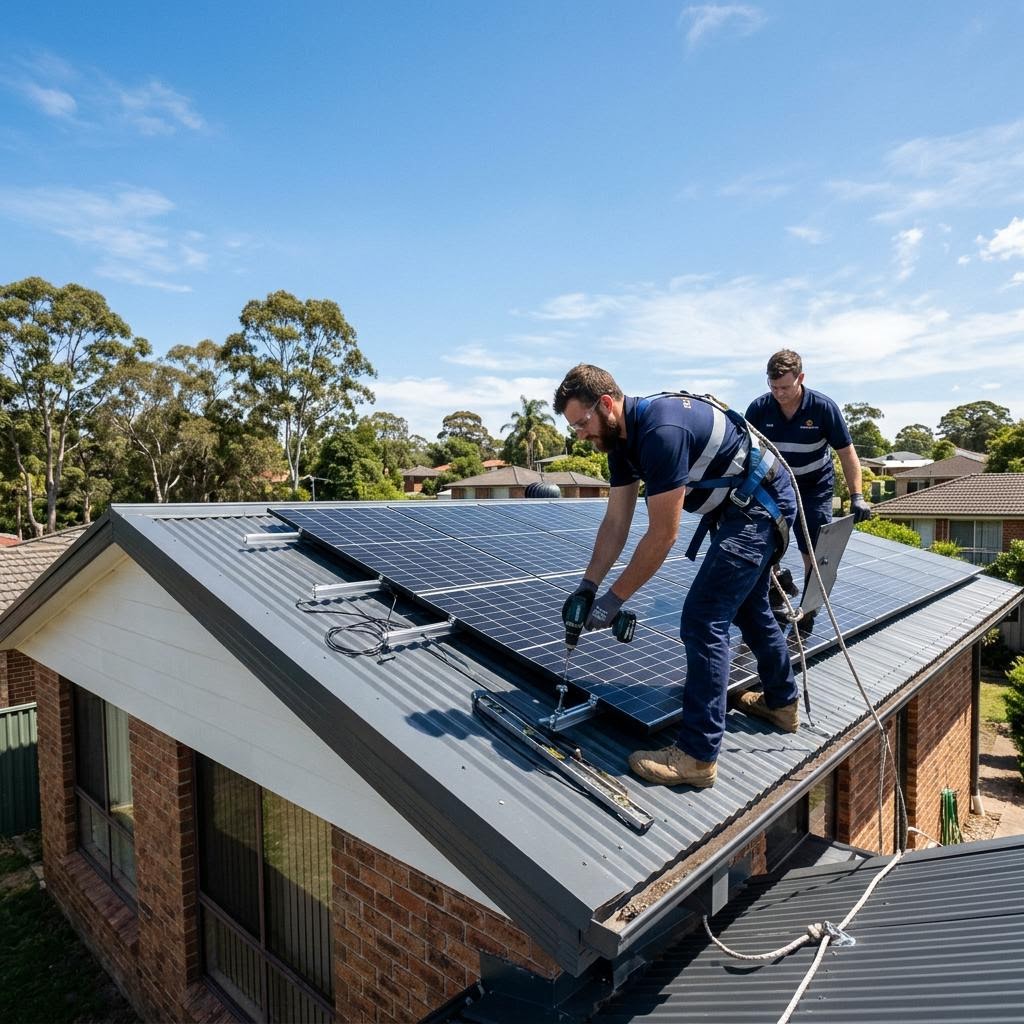
Solar makes a lot of sense in Sydney. We get plenty of sun, power prices keep climbing, and a good system pays for itself over time. But there's one part of the solar conversation that most installers skip over, and it's the part we care most about as roofers: your solar panels are going to be bolted to your roof for the next twenty-odd years. If the roof under them isn't up to it, you're building on shaky ground.
We're not a solar company and we won't pretend to be. What we are is the people who deal with the roof side of things — and we get called out often enough to fix leaks and cracked tiles caused by panels going onto roofs that weren't ready. This post is about what to check about your roof before you sign a solar contract, so you don't end up paying to take panels off and put them back on.
Why the Roof Comes First
Solar panels are designed to last a couple of decades. A tired roof might have only a handful of years left. If you install panels over a roof that needs replacing soon, you're locking in a problem: when the roof finally fails, you have to pay to remove the panels, replace the roof, and remount everything. That removal-and-reinstall cost is money you'd never have spent if the roof had been sorted first. The sensible order is roof first, solar second.
It's also about warranties and leaks. Every panel is fixed to the roof with mounting feet or brackets, and every one of those is a penetration that has to be sealed and flashed correctly. On a healthy roof in good condition, that's routine. On a brittle, ageing tile roof, drilling and clamping can crack tiles and open up leaks that don't show up until the next big storm.
There's a practical access point too. Once a full array is on your roof, that section becomes much harder to inspect, clean and repair. Gutters under the panels are trickier to clear, and a leak that starts beneath a row of panels can be hard to trace and reach. Sorting the roof out while it's bare and easy to work on simply makes life easier for everyone down the track, and it means you're not tiptoeing around expensive equipment every time maintenance is needed.
What to Check Before You Install
- Roof age and remaining life — if the roof is near the end of its life, replace it before installing solar, not after.
- Tile condition — look for cracked, chipped or slipped tiles, and check whether the ridge capping mortar is crumbling.
- Metal roof condition — check for rust, particularly at fixings and laps, and whether the sheets and screws are sound.
- Structural capacity — panels add weight; older or modified roof structures should be assessed before loading them up.
- Roof orientation and pitch — north-facing sections generally perform best in Sydney, but your installer will confirm the design.
- Existing leaks or damp in the roof space — fix these first, because you don't want them hidden under a field of panels.
You don't need to be an expert to do a basic sense-check from the ground. If your roof is visibly old, has patches of moss, cracked tiles or rust streaks, or if you've had leaks in the past, it's worth having it inspected before you commit to solar. A short roof inspection now is far cheaper than removing and reinstalling a whole solar array later.
Tile Roofs and Solar
Tiled roofs are the most common type we see solar going onto in Sydney, and they're generally fine for it — with care. The mounting feet need to be fitted so that tiles aren't left bearing weight or being levered up, and any tiles that crack during install must be replaced, not sealed over. We often recommend replacing a few brittle tiles and refreshing the ridge capping before the panels go on, so the roof is in solid shape for the long haul.
Metal Roofs and Solar
Metal roofs, including COLORBOND, take solar well because mounting systems can often clamp to the sheet ribs with minimal penetrations. Where screws are used, the sealing washers and flashing matter enormously — a poorly sealed screw hole in a metal roof will eventually weep. If your metal roof has any rust starting at the fixings or laps, deal with that first. A roof in genuinely good order gives your solar installer the best possible surface to work with.
The other thing worth checking on a metal roof is the condition of the existing fixing screws. On older roofs the rubber washers under the screw heads perish over time, and adding solar mounts alongside tired fixings can leave you with a patchwork of weak points. If the roof is due for a re-screw or has widespread rust, it's far better to bring it up to scratch before the array goes on than to work around it afterwards.
Getting the Timing Right
If your roof has plenty of life left and is in good condition, there's no reason to wait — book your solar and get on with it. If it's borderline or clearly ageing, the smart play is to replace or repair the roof first, then install solar onto a fresh surface you won't have to touch for years. Coordinating the two jobs in the right order saves you the double-handling cost and gives you a clean, watertight starting point.
We're happy to give you an honest read on where your roof stands. Our free, no-obligation inspection tells you the roof's condition, roughly how much life is left in it, and whether we'd recommend any repairs before panels go on. We'll give it to you straight — if the roof's fine for solar, we'll say so. Call the team on 0416 689 689 to book a look before you sign anything.