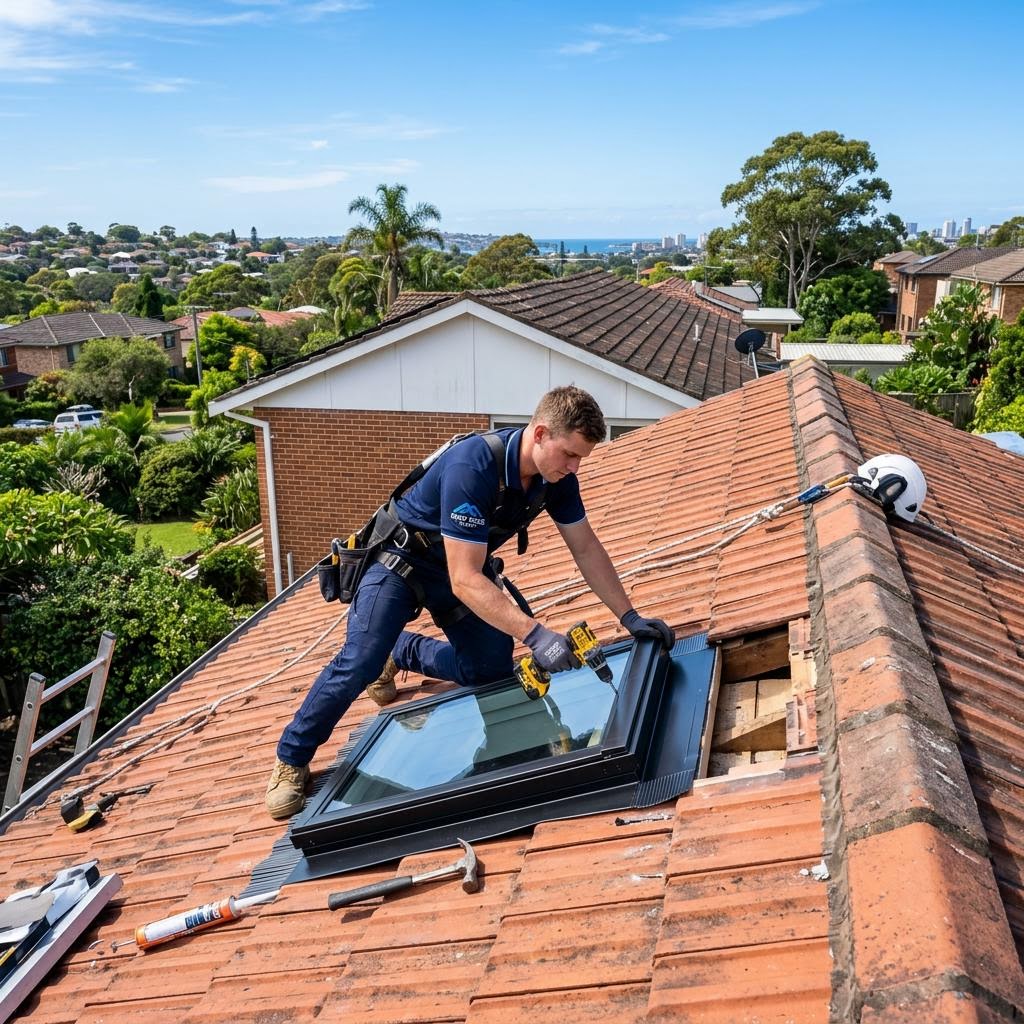
A well-placed skylight can turn a dim hallway, bathroom or kitchen into one of the brightest rooms in the house without you flicking a single switch. In older Sydney homes especially, where the middle of the floorplan can sit metres from any window, a skylight is often the cheapest way to fix a gloomy room. But there's a catch we're honest about with every homeowner: a skylight is a hole in your roof, and a hole in your roof is only as good as the flashing around it.
We fit and repair skylights across tile and metal roofs all over Sydney, and we've also been called out to plenty that were leaking within a year or two of being installed by someone else. The good news is that a properly installed skylight can last for decades with almost no fuss. This guide walks through the genuine benefits, why they leak when they do, and what a proper installation actually involves.
What a Skylight Actually Does for a Room
The obvious benefit is daylight. Overhead light from a skylight is far more even than light from a side window, so it fills a room rather than just brightening the wall nearest the glass. That means fewer lights on during the day and a room that simply feels bigger and healthier. In wet areas like bathrooms and laundries, the extra light and the option of a ventilating (opening) unit also help keep humidity and mould down.
There are two main styles worth knowing about. A fixed or ventilating glass skylight sits over a shaft that connects the roof to the ceiling below — best for rooms where you want a real view of the sky and can accept some build cost. A tubular skylight (a reflective tube with a small dome on the roof) is a much smaller job, ideal for hallways, walk-in robes and windowless bathrooms where you just want daylight, not a view.
Why Skylights Leak — and How Good Installation Prevents It
Almost every leaking skylight we attend has the same root cause: the flashing was rushed or the wrong type. Flashing is the metal apron that ties the skylight into the surrounding roof so water is directed around and past it. On a tiled roof this means dressing the flashing into the tile profile and lapping it correctly with the tiles above; on a metal roof it means matching the flashing to the sheet profile so water can't pond or track sideways underneath.
- Poor or missing flashing — the number one cause, and almost always avoidable.
- Sealant used as the primary waterproofing instead of proper flashing. Silicone perishes; flashing lasts.
- Condensation mistaken for a leak — warm, moist indoor air hits cold glass and drips, especially in bathrooms and unventilated shafts.
- A skylight installed too low on the roof pitch, where water volume and speed are highest.
- An ageing unit where the seal around the glass or dome has finally perished after many years.
It's worth separating a genuine leak from condensation, because the fix is completely different. If you only see moisture after cold nights or long hot showers, and it appears as fine droplets rather than a run of water after rain, you're likely dealing with condensation. Better ventilation, an insulated shaft, or a ventilating unit usually solves it. If water tracks in during or shortly after rain, that's a flashing or seal problem and it needs a roofer.
What a Proper Installation Involves
A good skylight install is as much carpentry and waterproofing as it is roofing. We start by choosing the position from inside and out — clear of rafters and trusses where possible, on a part of the roof that drains well, and lined up so the shaft can run cleanly to the ceiling opening. From there the roof is opened, the frame is built and set at the right height above the roof surface, and the flashing is dressed into the surrounding tiles or sheets.
The internal shaft is then framed, insulated and lined so it looks like a deliberate feature rather than an afterthought, and the ceiling opening is finished to match the room. For tubular skylights the process is quicker because there's no built shaft — just the roof dome, the reflective tube and a ceiling diffuser — but the flashing at the roof still has to be done properly. Whatever the type, we leave the roof watertight and clean up as we go.
Looking After a Skylight Long Term
Skylights are low maintenance, not no maintenance. Every so often it pays to clear leaves and debris from around the dome or glass, since a build-up can dam water and force it sideways under the flashing. Check the internal lining for any staining, which is an early warning sign, and if you have a ventilating unit, keep the seals and any electronics clean and dry. When we're already on your roof for a service or gutter clean, we'll give any skylights a quick once-over at no extra charge.
If you've got a dark room you'd love to brighten, or a skylight that's started to leak, we're happy to take a look. We offer a free, no-obligation inspection where we'll tell you honestly whether a skylight is the right call, which style suits the space, and — if it's an existing unit — whether it needs repair or replacement. Give the team a ring on 0416 689 689 and we'll sort a time that works for you.